Initializing Wisdom...
Gallery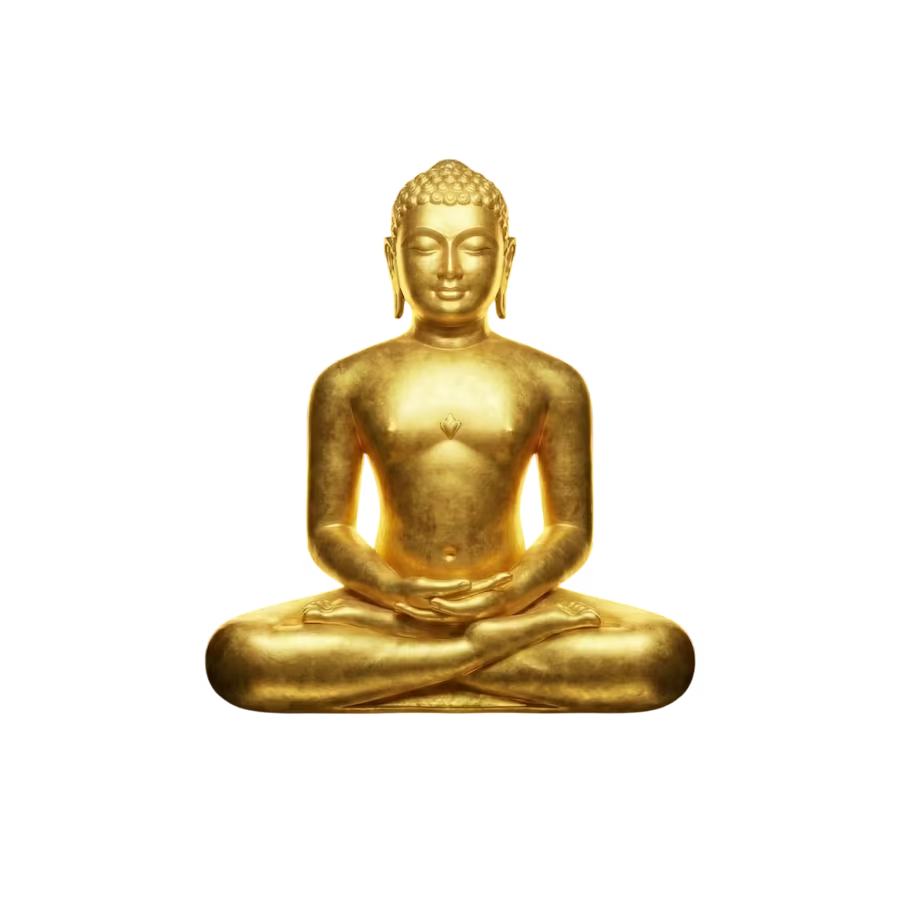

Witness the
Bull
The 1st Arhat
Adinath
Father
Nabhiraay
Mother
Marudevi
Dynasty
Ikshvaku (Kshatriya)
Gotra
Kashyap
Symbol
Bull
Kevala Tree
Banyan Tree
Birthplace
Ayodhya
Lifespan
84 Lakh Purva
Height
500 Dhanush
Nirvana
Mount Kailash (Ashtapad)
Yaksha
Gomukha
Yakshini
Chakreshwari Devi
Scroll the Life
Step 01
Garbha
TimeAshadh Krishna Dwitiya
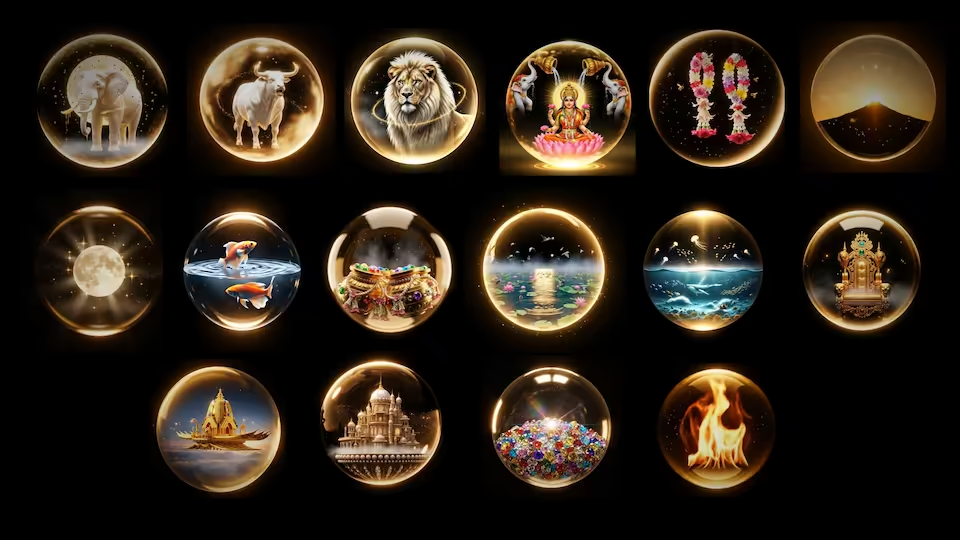
Key DetailDreams: Elephant, Bull, Lion, Laxmi, Garland, Moon, Sun, Flag, Kalash, Lotus Lake, Ocean, Plane, Heap of Jewels, Smokeless Fire.
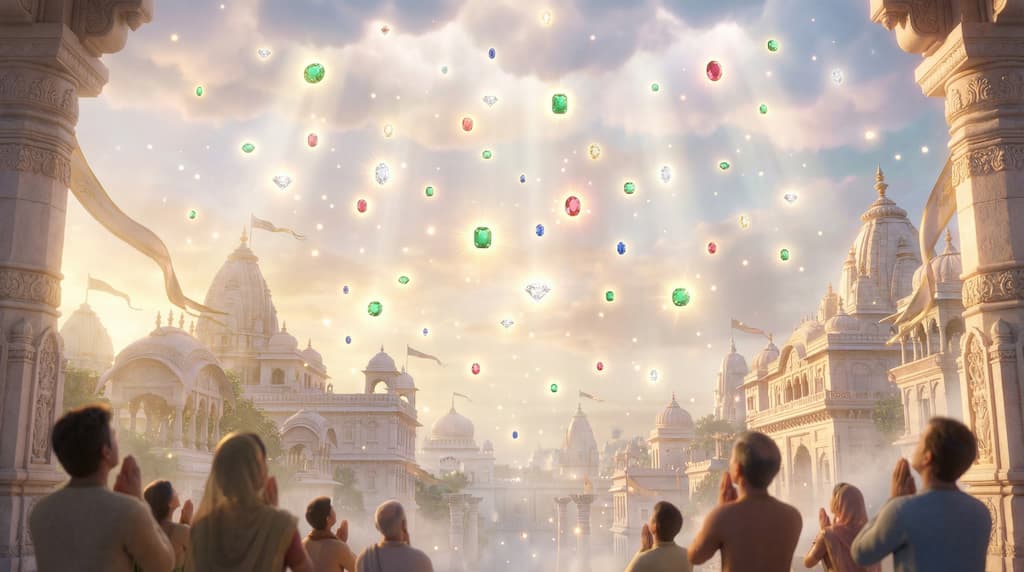
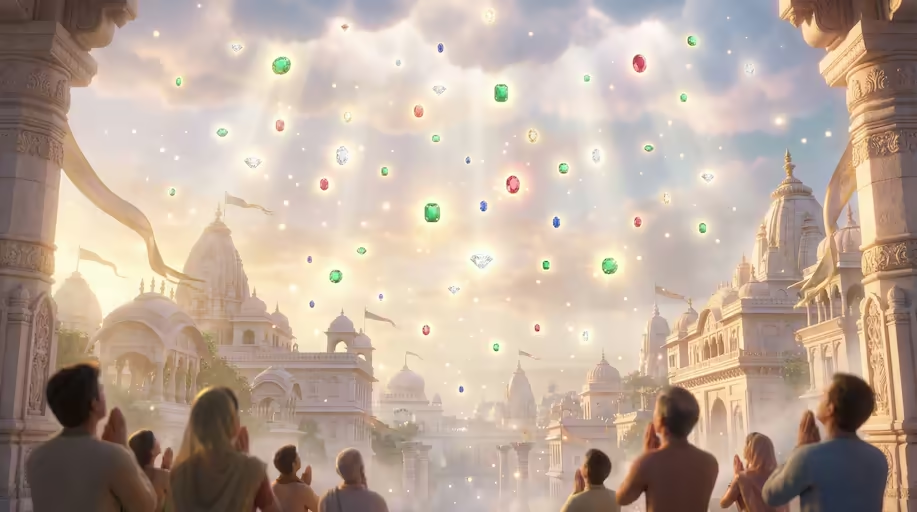
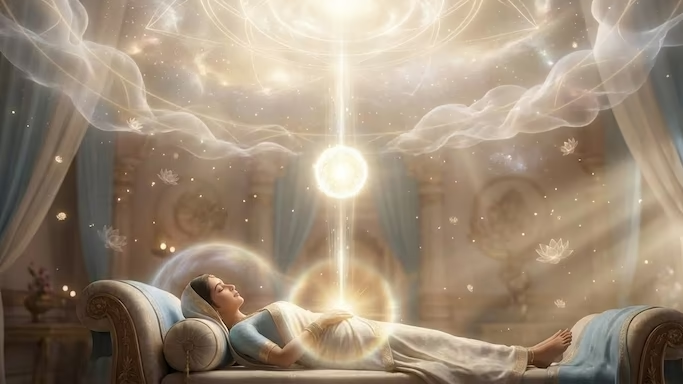
Six months prior to Bhagwan Ṛiṣabhdev’s descent from the Sarvārth Siddhi Vimaan, by the command of Indra, Kuber begins Ratna Vṛṣṭi (jewel-rain) in the city of Ayodhya. Divine jewels started raining from the sky, and the atmosphere of happiness, peace, and auspiciousness spread throughout the city. This Ratna Vṛṣṭi is considered the first sign of a Tīrthaṅkar’s Garbha Avataraṇ.
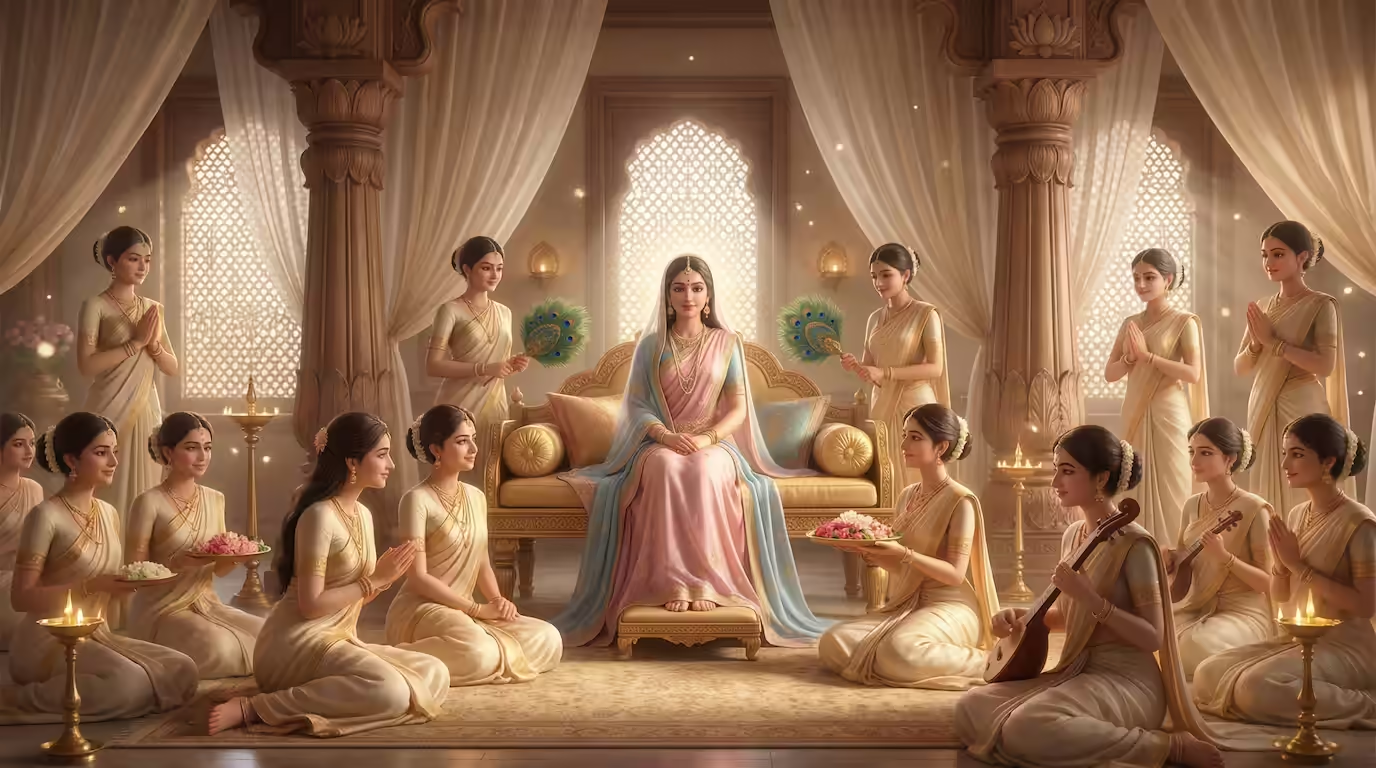
During this six-month period, 56 Dikkumārī Devis (Aṣṭa-kumārīkā) arrived in Ayodhya and were appointed to serve Mata Marudevi. These Devis constantly engaged in divine conversations to keep the mother joyful, entertained her, and prepared her physically and spiritually to hold the supreme soul. They remained continuously present as her companions and attendants.
On the day of Āṣāḍh Krishna Dvitīyā, the soul of Bhagwan Ṛiṣabhdev descended from Sarvārth Siddhi and entered the womb of Mata Marudevi. This moment is known as Garbha Avataraṇ and is the principal moment of the Garbha Kalyāṇak.
Immediately after the garbha pravesh, Mata Marudevi saw sixteen auspicious dreams — Lion, Elephant, Bull, Goddess Lakshmi, Garland, Moon, Sun, Flag, Kalash, Lake, Ocean of Milk, Celestial Aircraft, Heap of Jewels, Fire, Pair of Fish, and Throne.
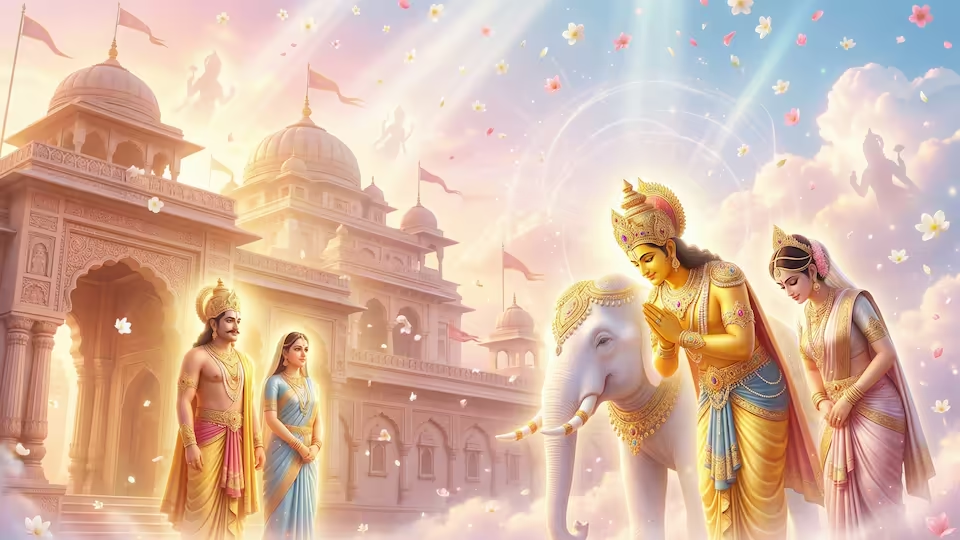
Through his Avadhi Gyaan, Indra came to know about the Garbha Avataraṇ of the Tīrthaṅkar. He arrived in Ayodhya along with Indrāṇī, circumambulated the city and the royal palace, and bowed to King Nābhirāy and Mata Marudevi. A grand celebration was held by the celestial beings, and with this, the Garbha Kalyāṇak concluded.
Step 02
Janma
TimeChaitra Krishna Navami
PlaceAyodhya
On Chaitra Krishna Navami, in the city of Ayodhya, Māta Marudevī gave birth to Bhagwān Ṛiṣabhdev, the first Tīrthaṅkar of this avasarpiṇī. At the exact moment of His birth, a profound divine effect spread across the three worlds. For a brief moment, suffering in the lower realms became inactive, and peace, light, and auspiciousness prevailed throughout the cosmos.
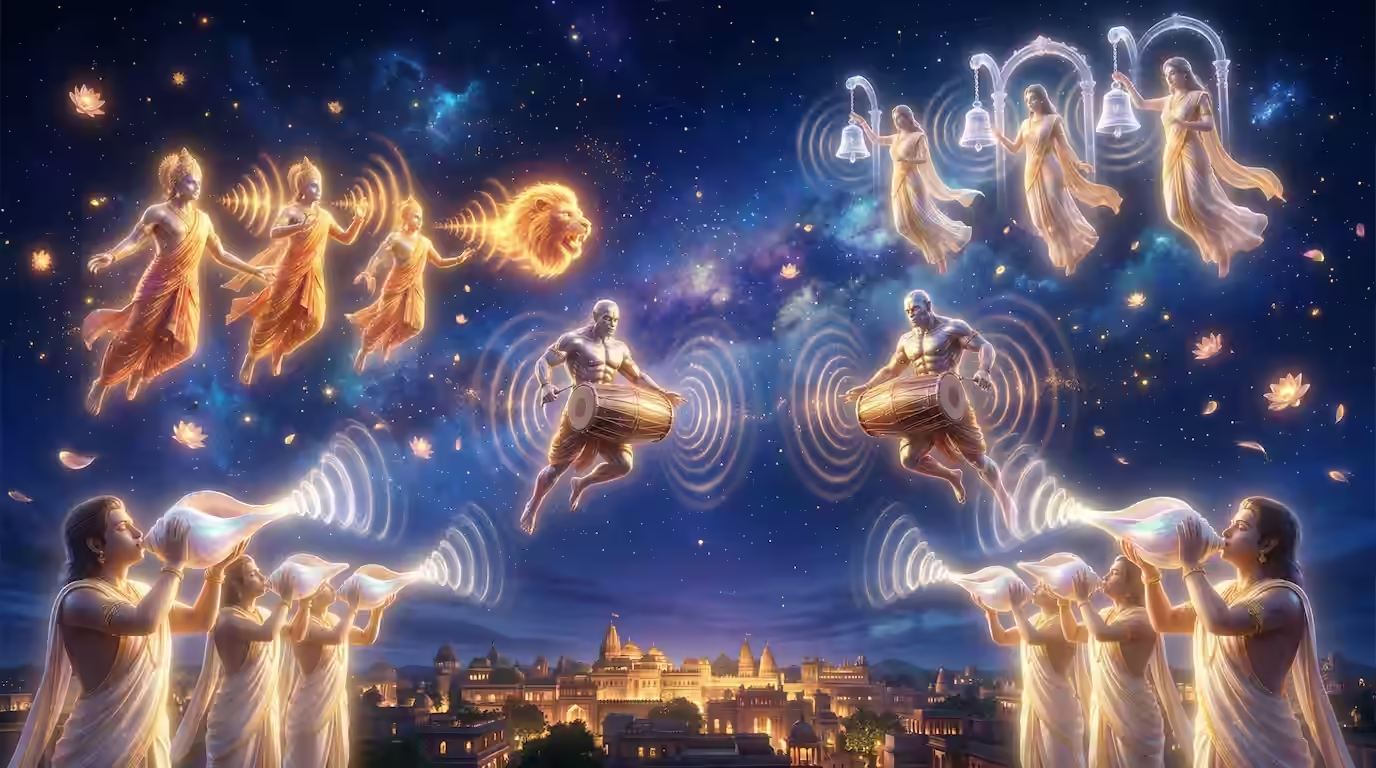
Immediately after the divine birth, the deities of the four Nikāyas arrived to celebrate. Bhavanvāsī Devas sounded conch shells, Vyantara Devas beat divine drums, Jyotiṣka Devas produced lion-like roars, and Kalpavāsī Devas rang celestial bells. These spontaneous sounds announced the birth of the first Tīrthaṅkar to all realms.
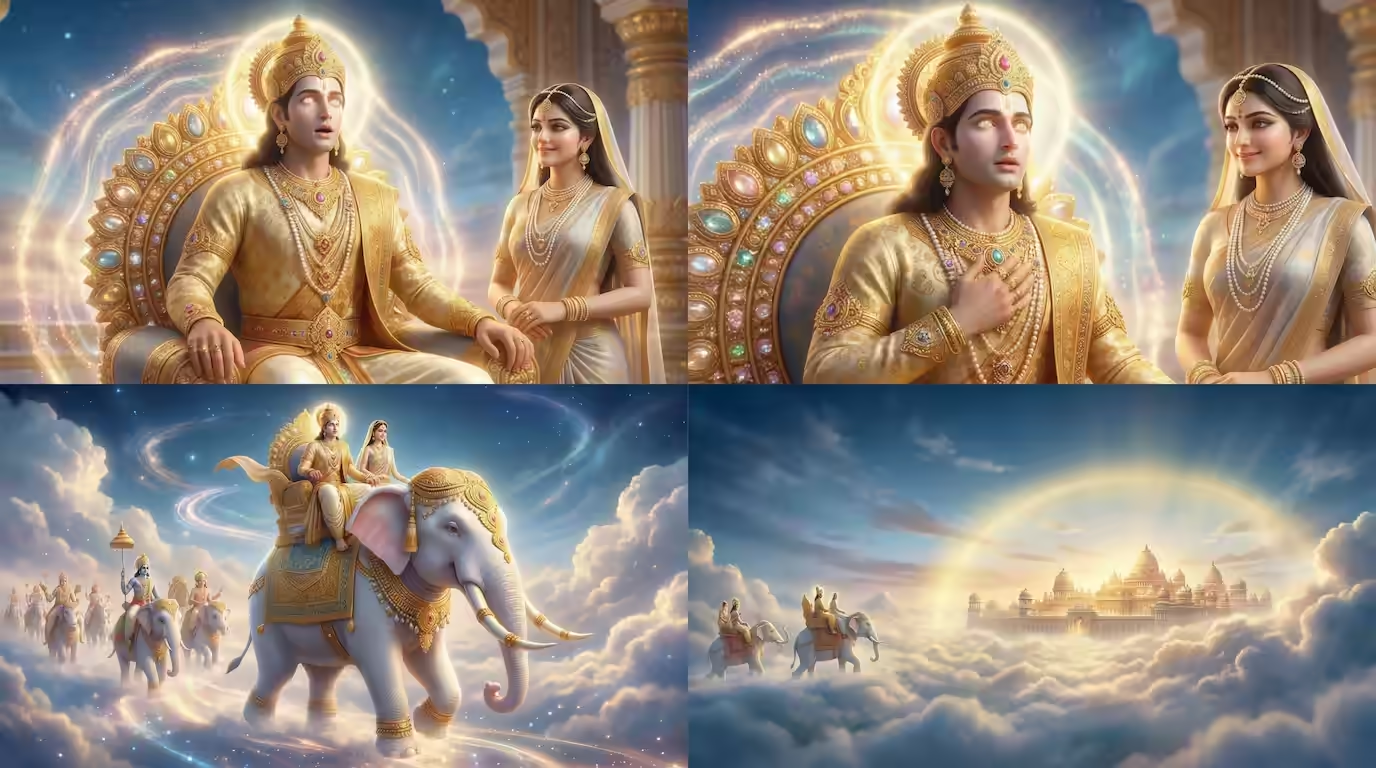
In Saudharma heaven, the throne of Saudharma Indra shook violently. Using his Avadhi Jñāna, Indra realized that the first Tīrthaṅkar had been born. Filled with devotion, he immediately set out for Ayodhya with his divine retinue, accompanied by Indrāṇī Śacī, riding the celestial elephant Airāvata.
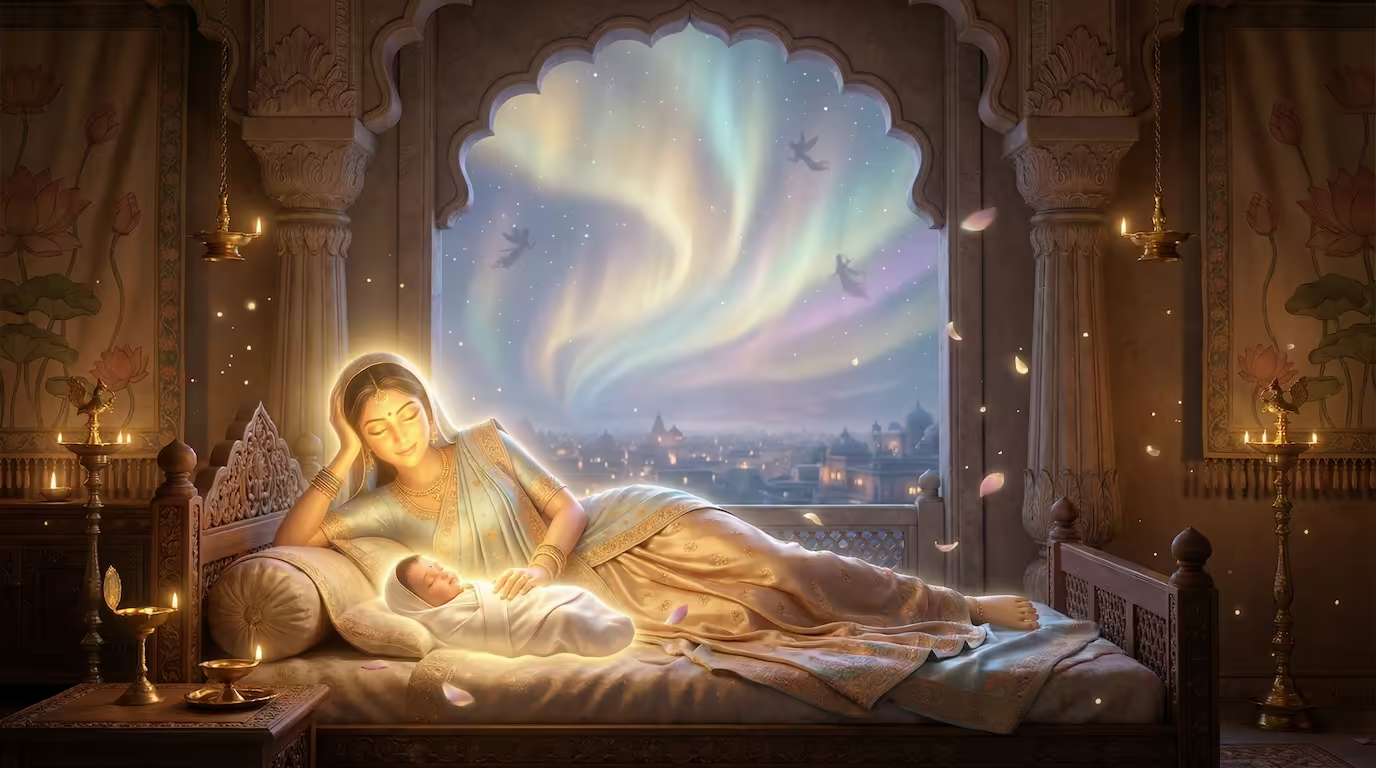
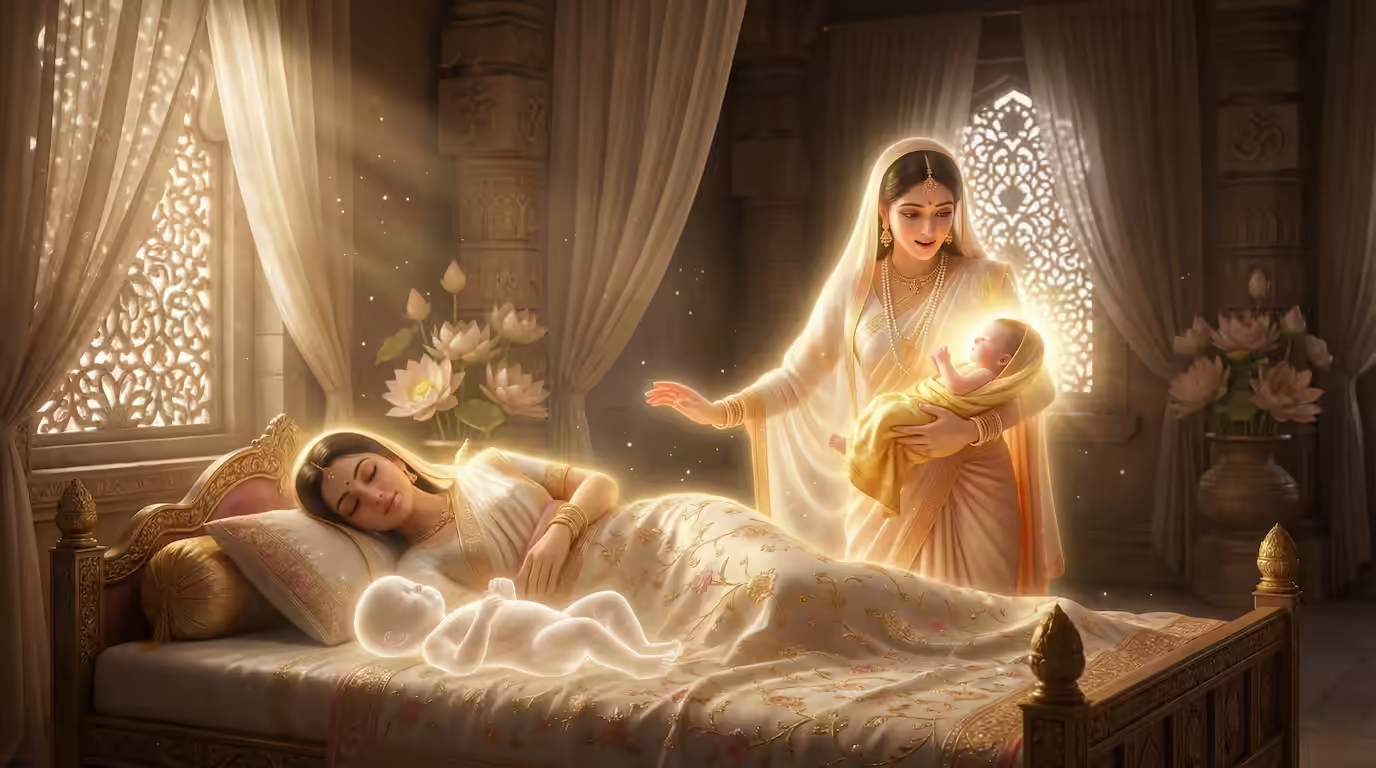
Indra sent Indrāṇī into the delivery chamber. She gently placed Māta Marudevī into a deep blissful sleep known as Avasvapnī Nidra. Creating a divine illusory child, she placed it beside the mother and respectfully carried the actual Tīrthaṅkar infant out to Indra.
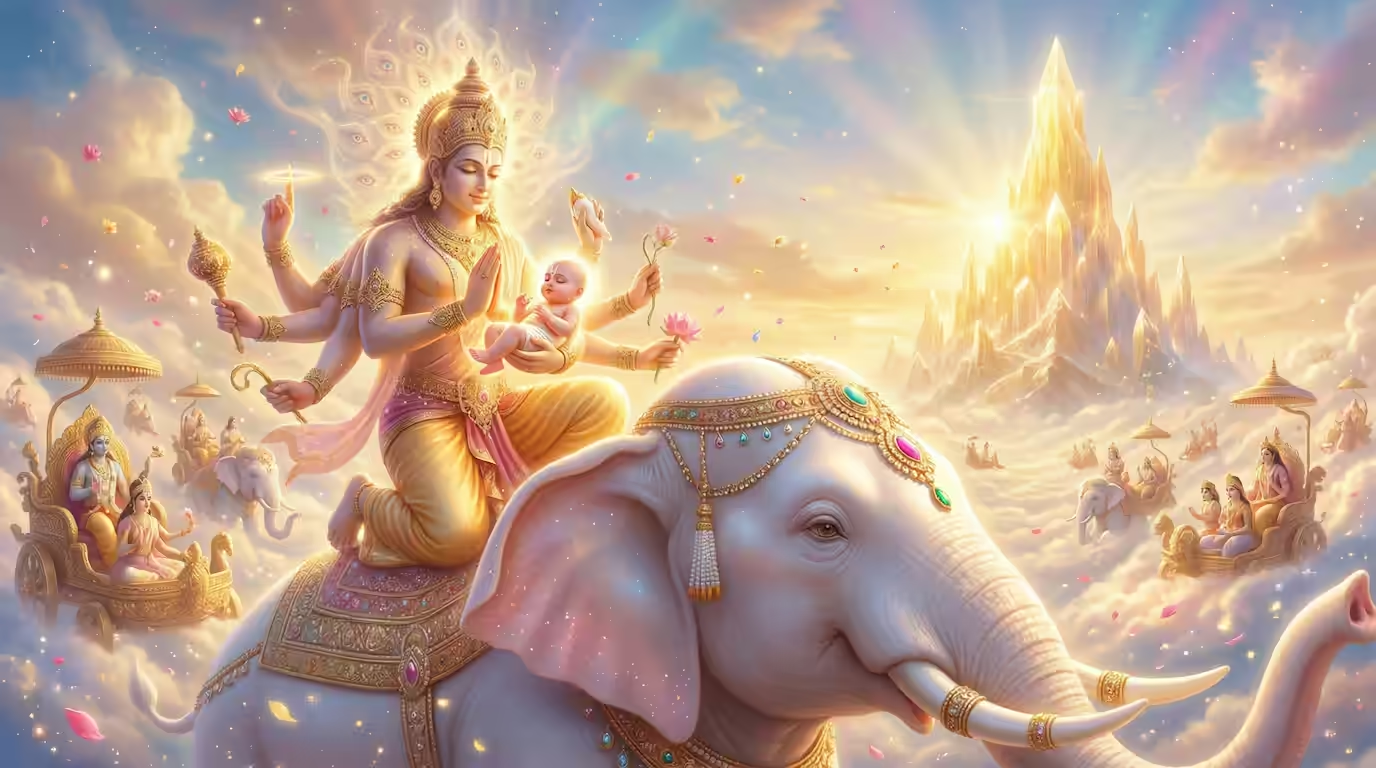
Seeing the divine child, Saudharma Indra was overwhelmed with devotion and manifested one thousand eyes, realizing two eyes were insufficient to behold the Lord’s beauty. Seating the infant on his lap, Indra led a grand procession on Airāvata towards Mount Meru, accompanied by countless deities.
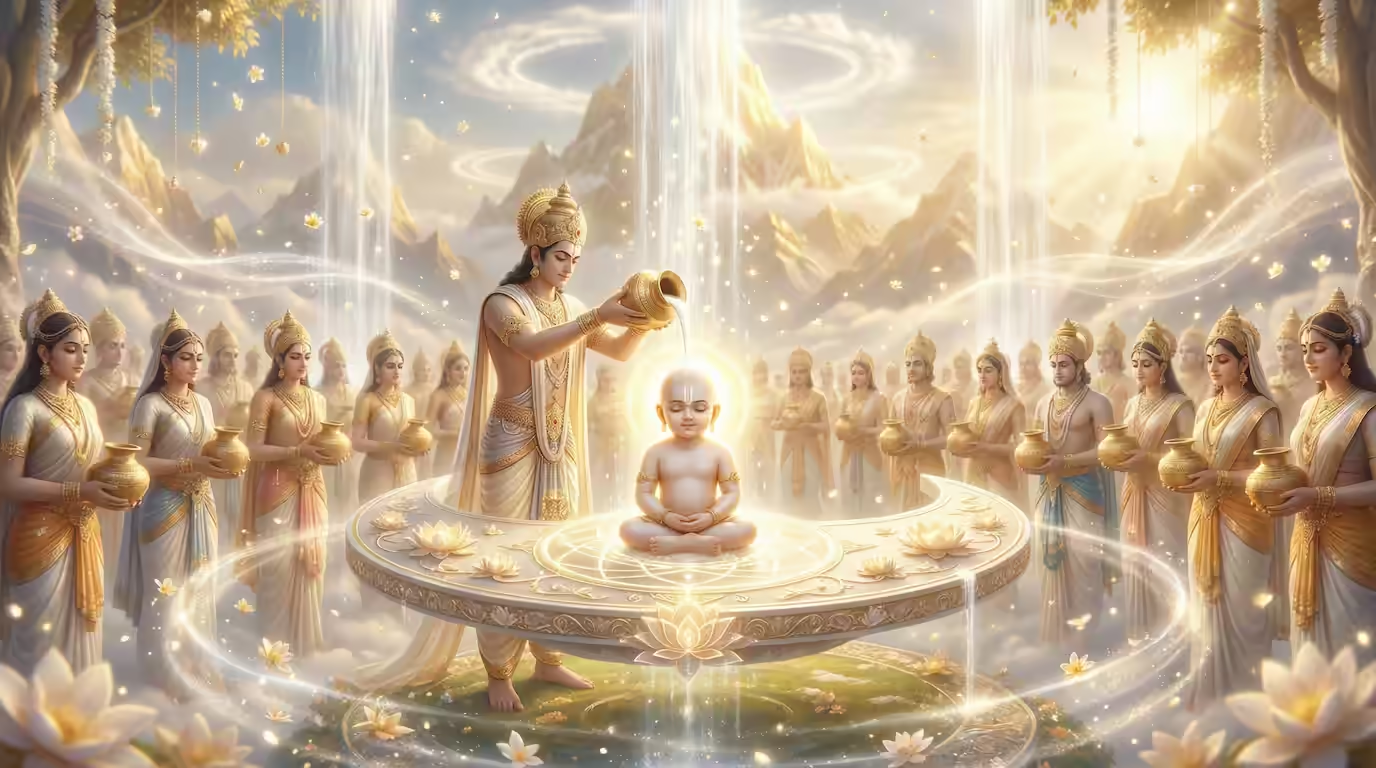
At the summit of Mount Meru, the procession reached Pāṇḍuk Vana, where the crescent-shaped Pāṇḍuk Śilā was prepared. The Lord was seated upon it, and the Devas performed Janmābhiṣek using 1008 golden pitchers filled with water from the Kṣīr Sāgar, while Indra led the ritual with deep devotion.
After the Abhiṣek, the Lord was adorned with divine garments and celestial ornaments. Observing the signs of greatness and recalling Māta Marudevī’s dream of the bull, Indra named the child Ṛiṣabhdev. Recognizing Him as the first of all Tīrthaṅkars, Indra also hailed Him as Ādināth.
The procession returned to Ayodhya. Indrāṇī replaced the illusory child with the real infant beside Māta Marudevī, who awoke unaware of the divine journey. Overwhelmed with joy, Saudharma Indra performed the celebrated Ānanda Tāṇḍava in the royal court. Thus, the Janma Kalyāṇak concluded in supreme divine celebration.
Step 03
Diksha
TimeChaitra Krishna Navami
PlaceSiddhartha Vana (Ayodhya)
Key DetailReason: Witnessing the death of Nilanjana.
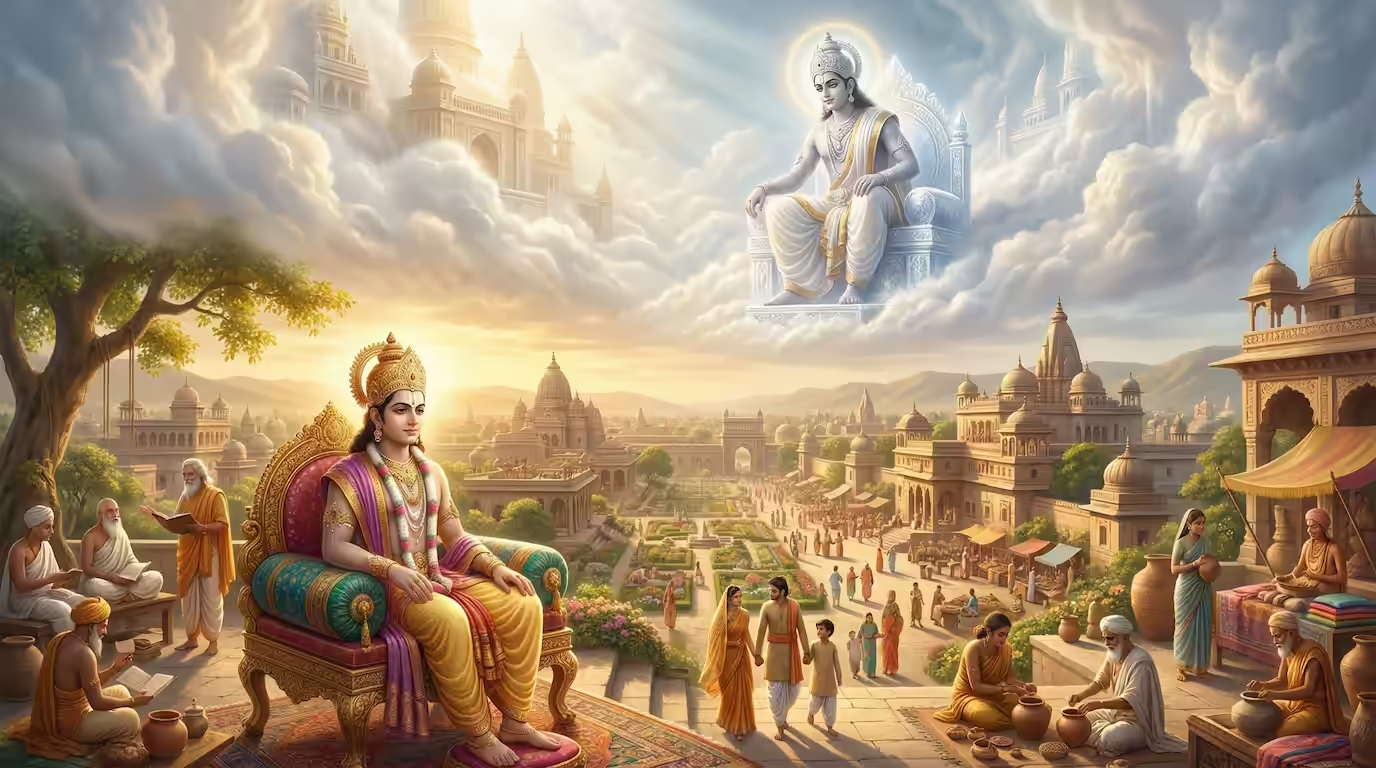
Bhagwan Ādināth ruled Ayodhyā for an immeasurably long time, establishing civilization, social order, and righteous governance. When the destined moment for renunciation arrived, Saudharma Indra perceived that the Lord’s inner detachment was ready to manifest.
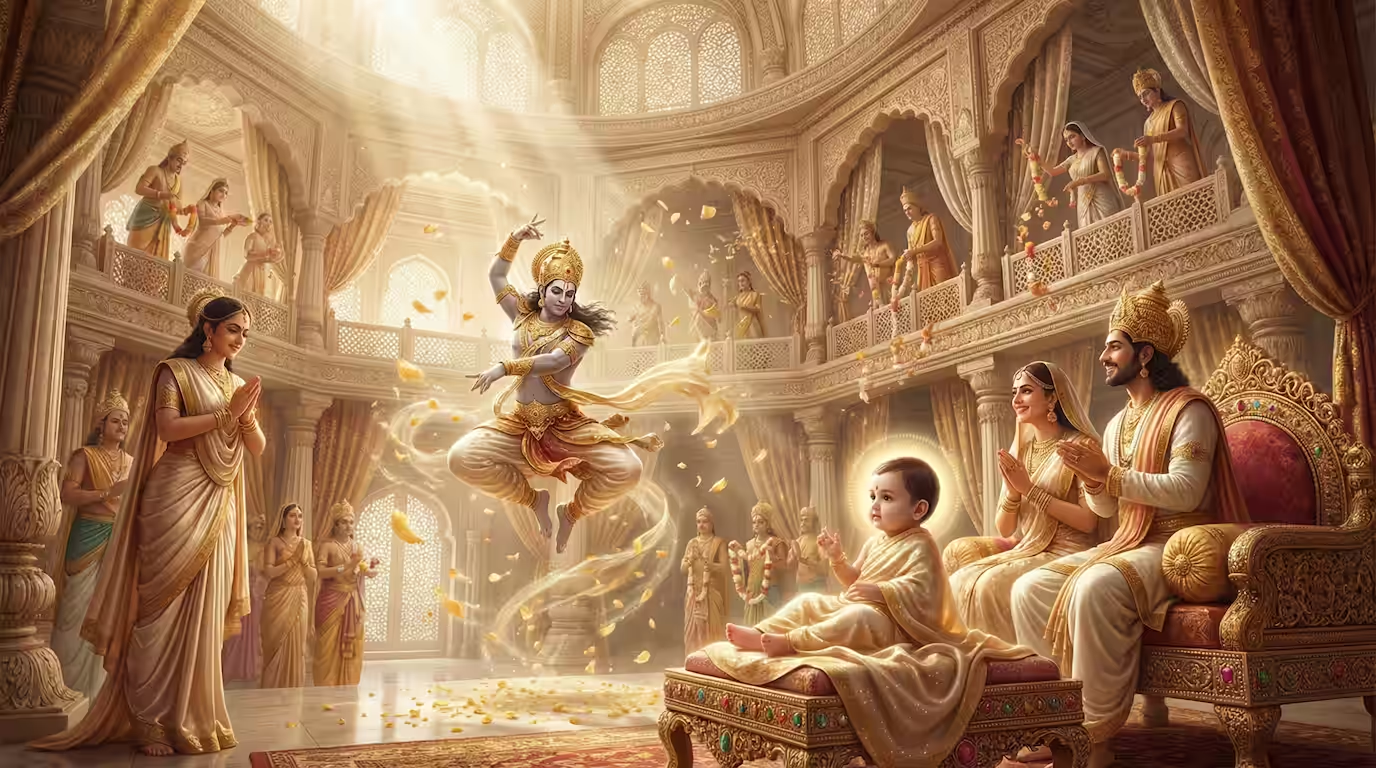
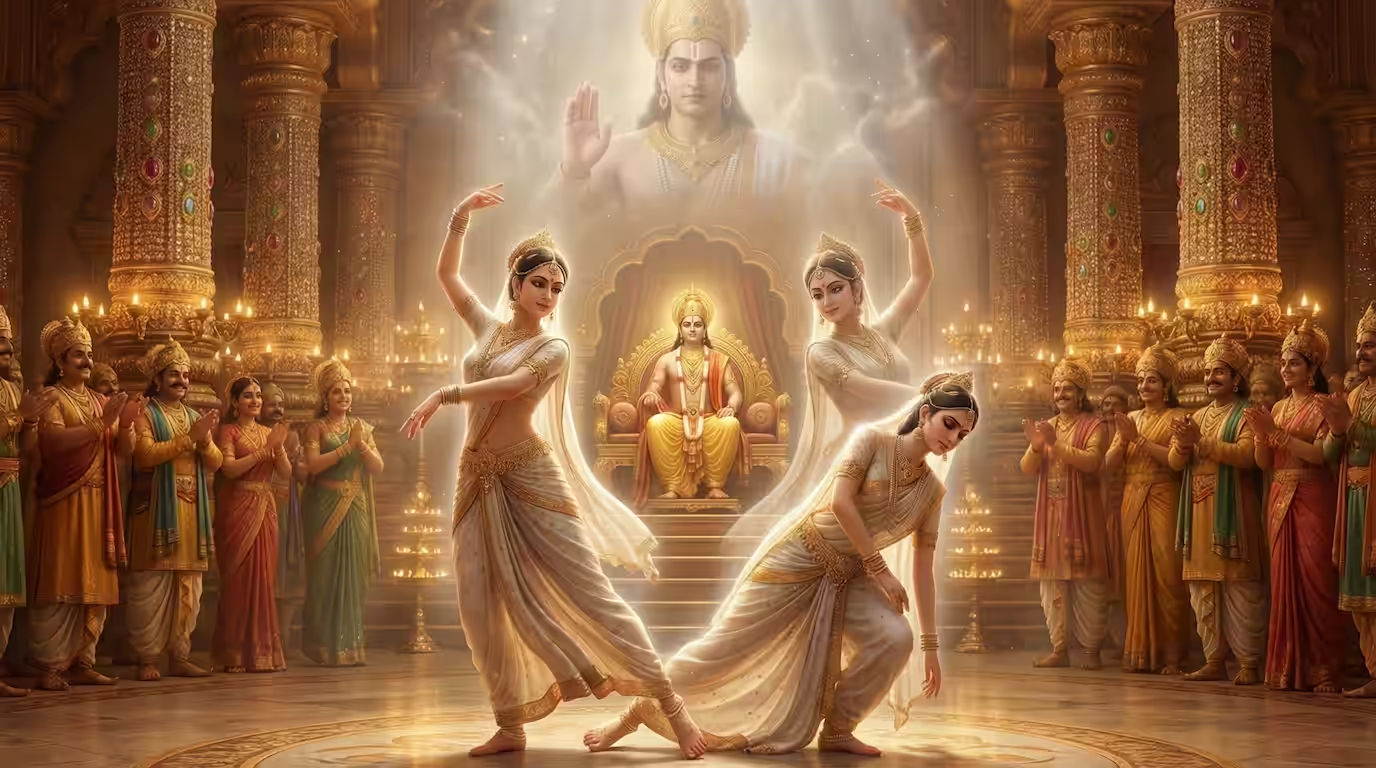
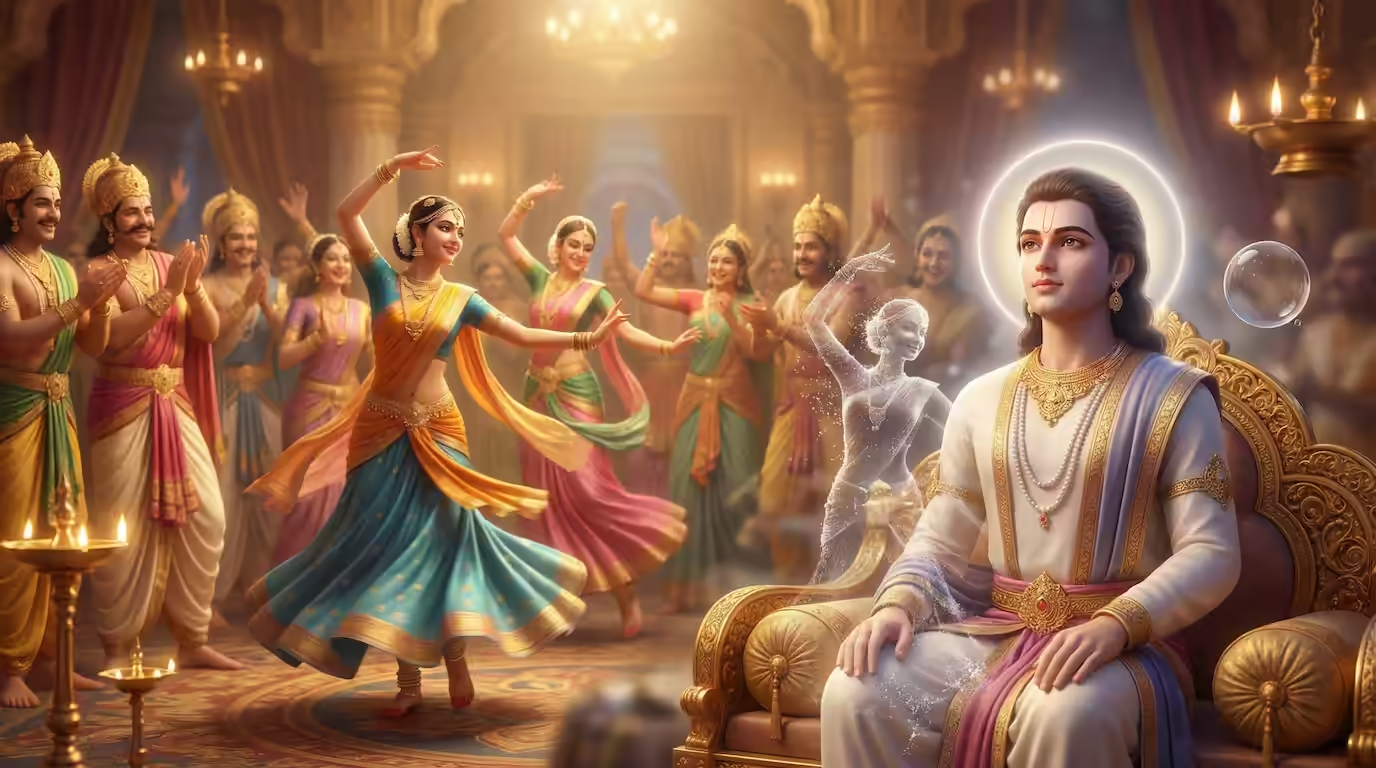
To awaken this latent vairāgya for the benefit of the world, Indra arranged a grand celestial assembly in the royal court. The most beautiful apsarā, Nīlāñjanā, was invited to perform a divine dance. While dancing, Nīlāñjanā’s āyu karma suddenly exhausted. In a single moment, she collapsed and died. To maintain continuity for the unaware audience, Indra instantly replaced her with another identical celestial dancer, and the performance continued seamlessly.
All present remained oblivious — except Bhagwan Ādināth. With his extraordinary perception, he directly witnessed Nīlāñjanā’s death. Reflecting deeply, he realized:“If even a celestial being’s life vanishes like a bubble of water, what permanence exists in this worldly existence?”
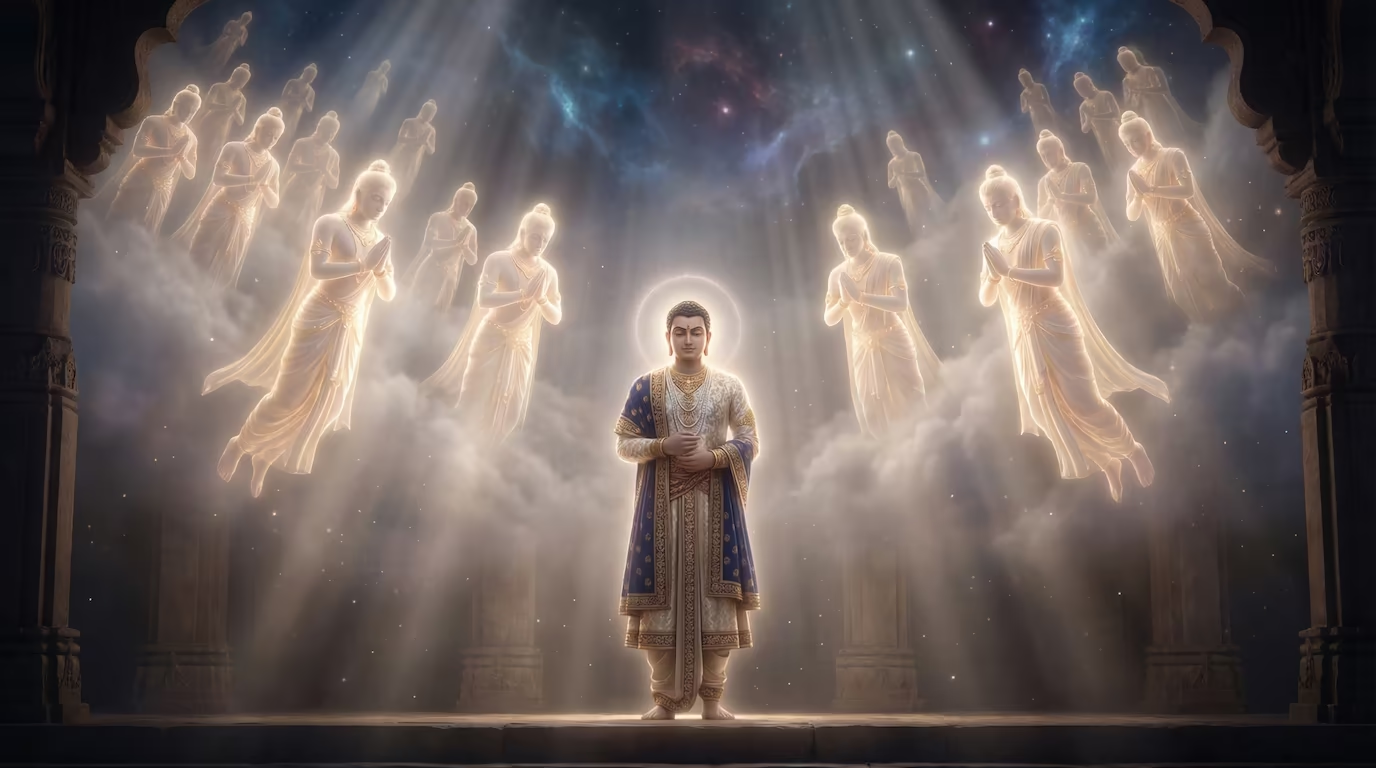
The moment Bhagwan Ādināth resolved to renounce the world, the Laukāntika Devas — celestial beings dwelling at the edge of Brahmaloka and destined for liberation — descended from the heavens. They bowed with profound devotion and prayed: “O Lord, please accept Diksha and establish the Tīrtha for the salvation of countless souls.”
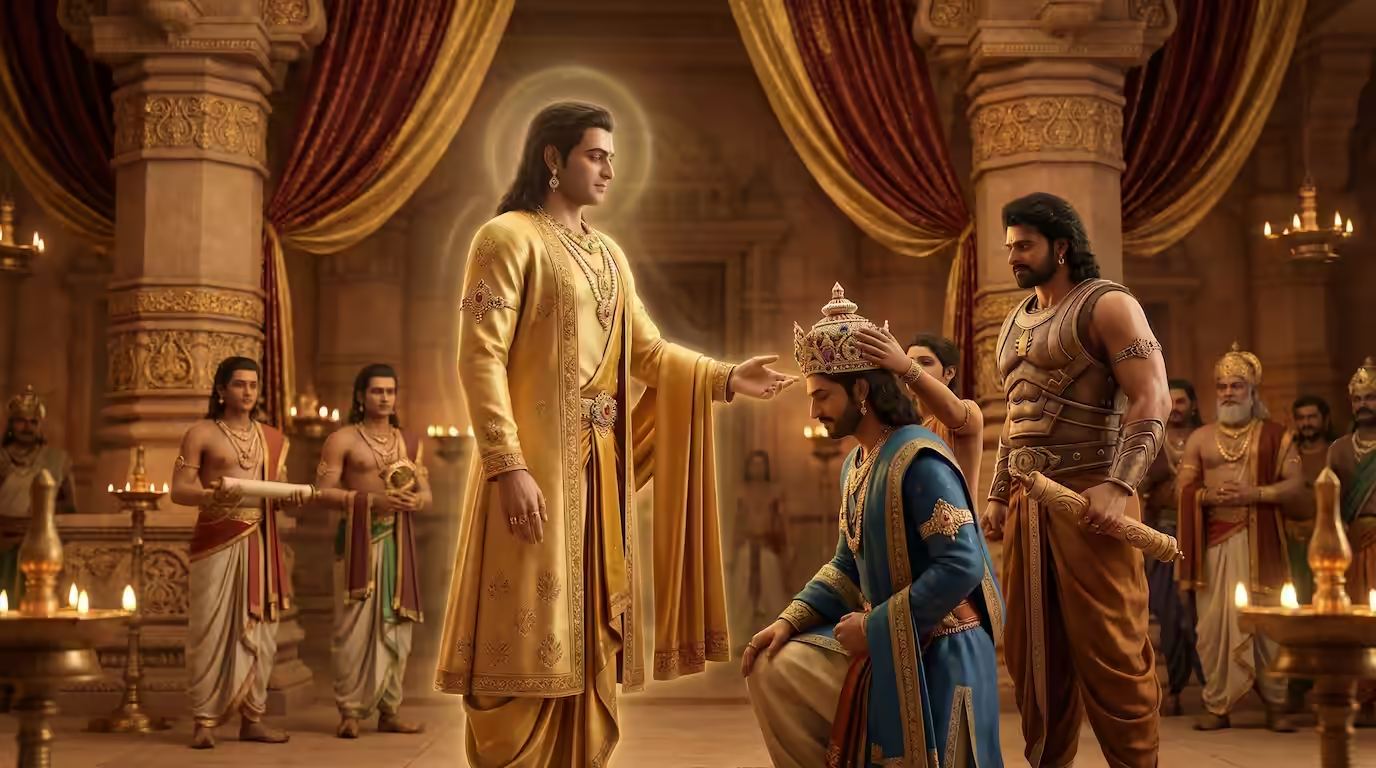
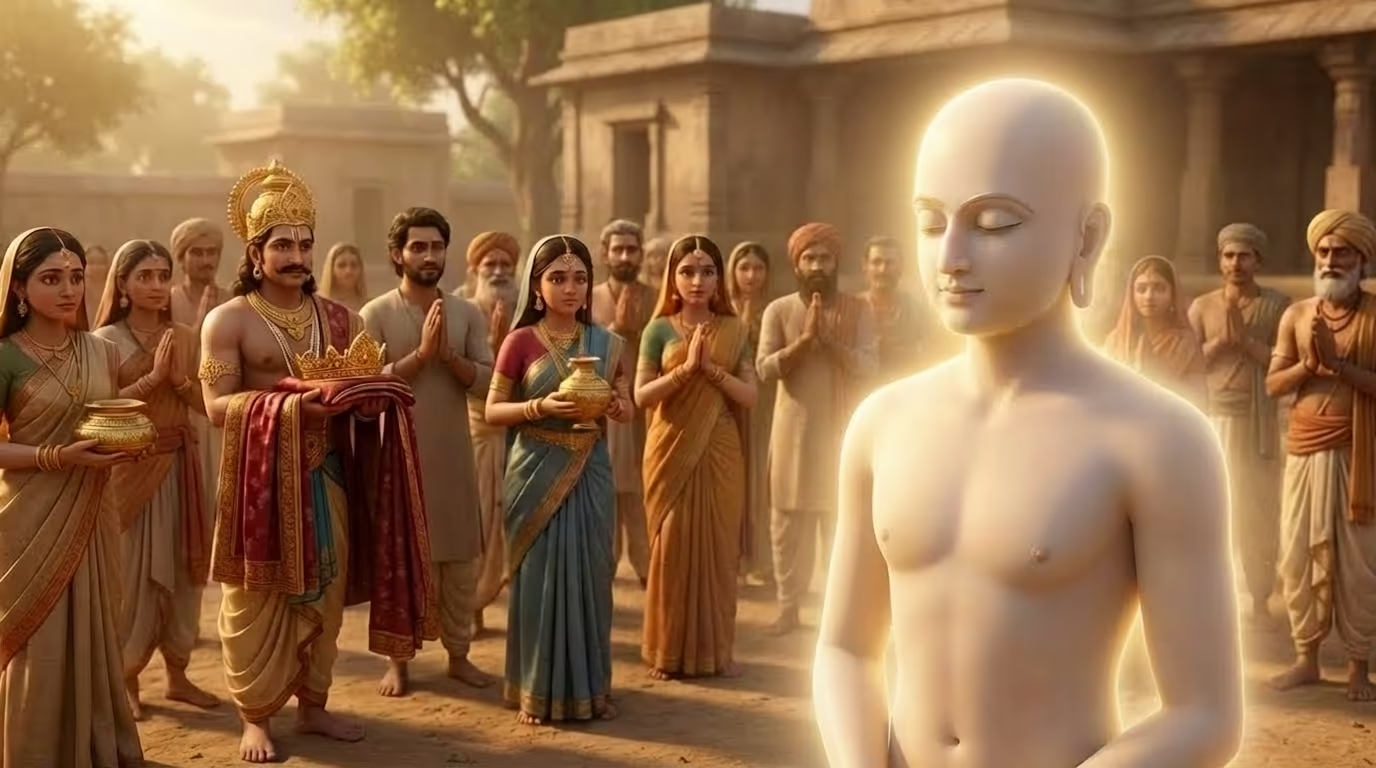
Bhagwan Ādināth summoned his sons and formally relinquished all worldly authority. Bharata, his eldest son, was crowned King of Ayodhyā and destined to become the first Chakravartī. Bāhubali, his second son, was given the kingdom of Podanpur. The remaining territories were distributed among his other sons. Having fulfilled all worldly responsibilities, the Lord prepared for complete renunciation.
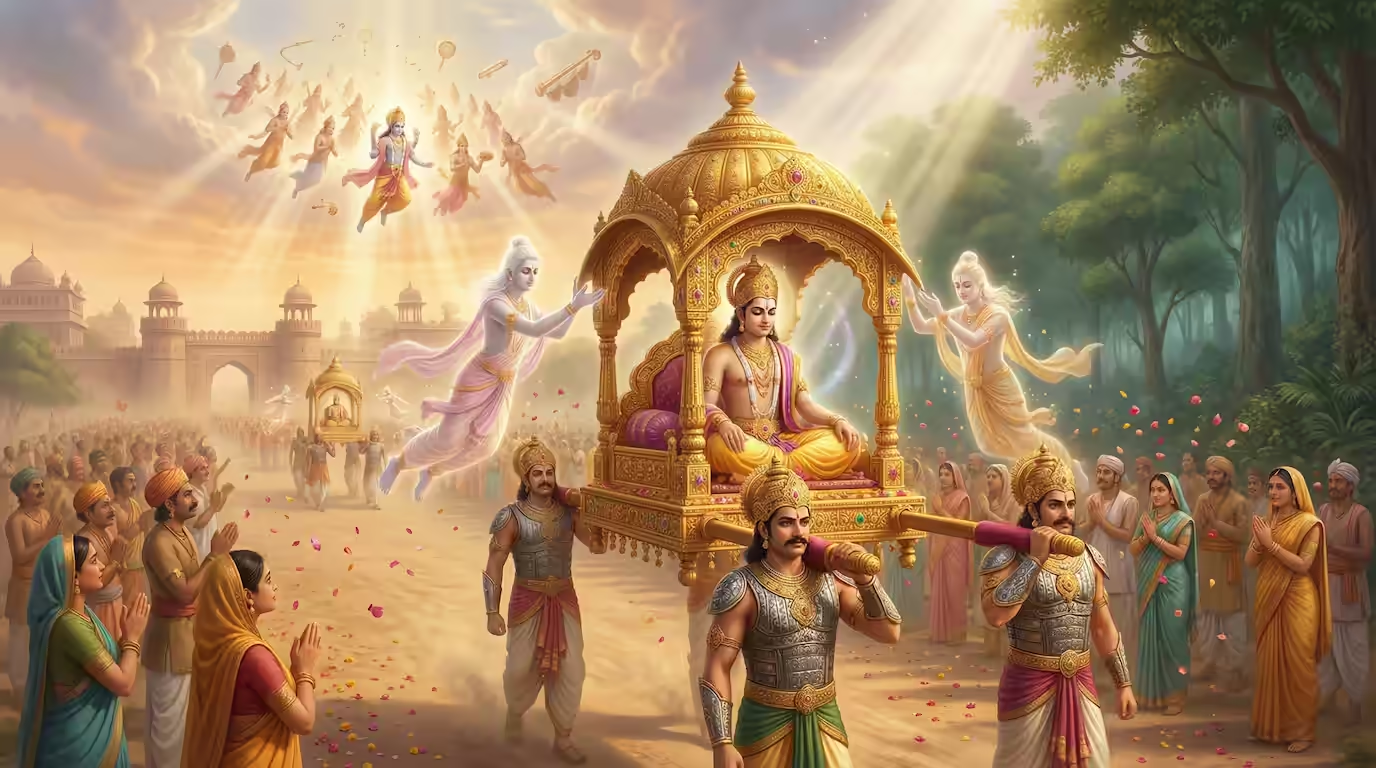
Saudharma Indra created a magnificent divine palanquin named Sudarśanā. Bhagwan Ādināth ascended the palanquin. First, it was carried by great kings, then by Vidyādharas, and finally by the Devas themselves. The grand procession moved from Ayodhyā to Siddhārtha Vana, a sacred garden near Prayāg.
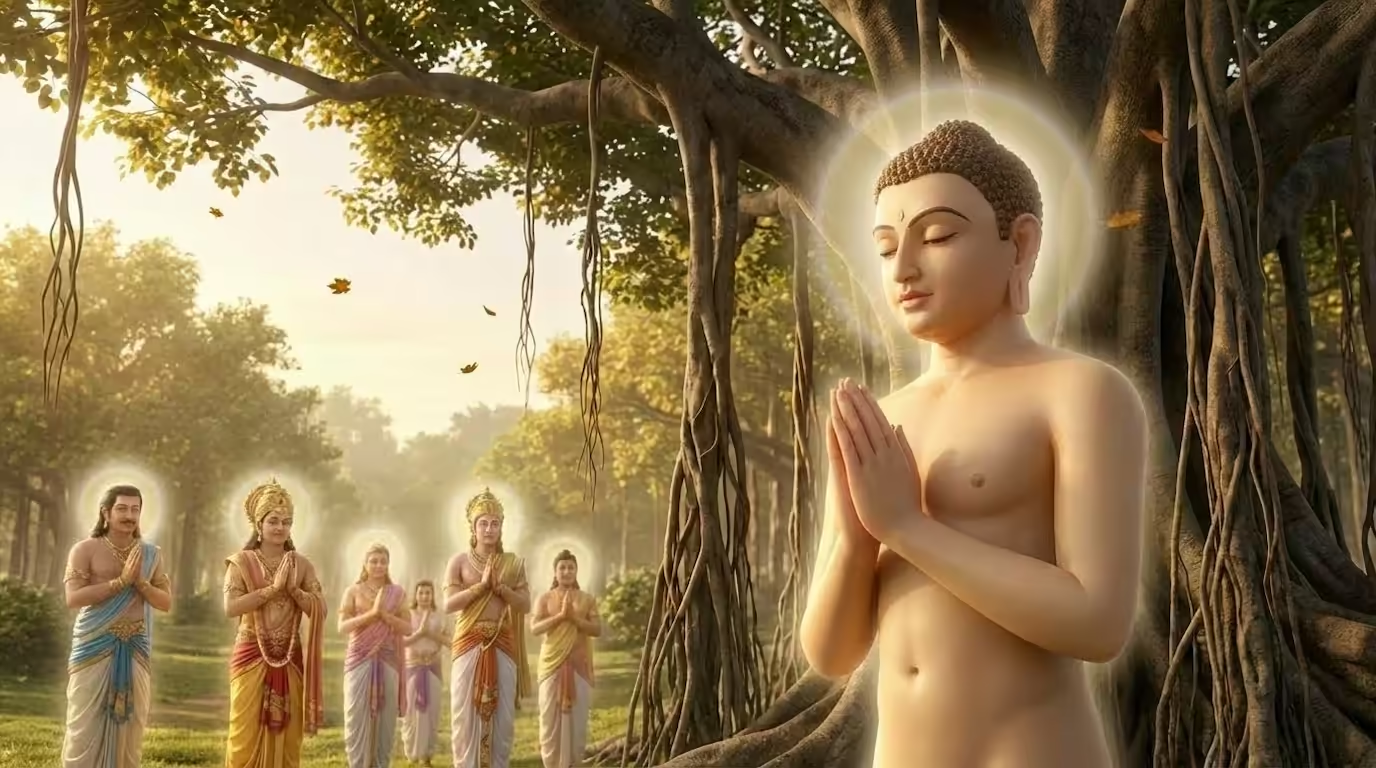
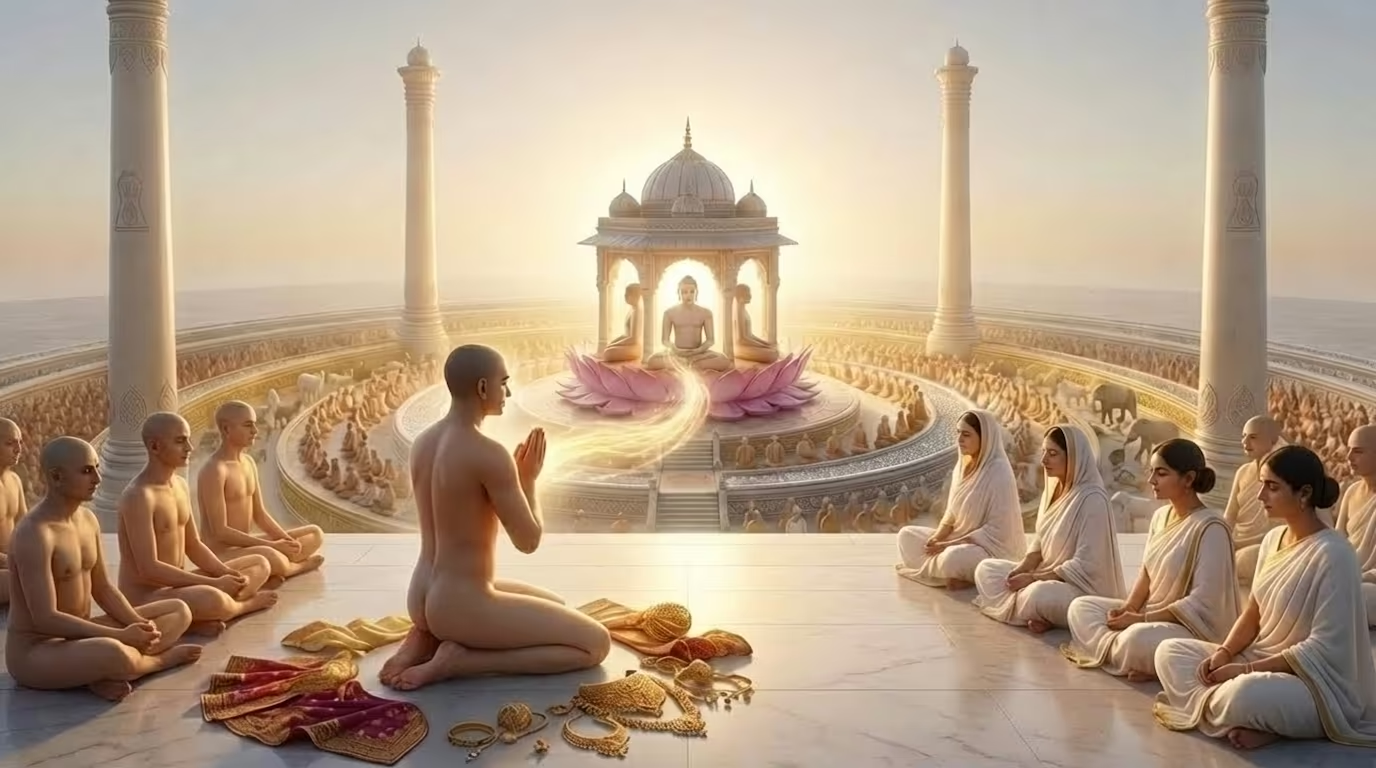
On Chaitra Krishna Navamī — the same auspicious tithi as his birth — Bhagwan Ādināth descended from the palanquin beneath a Banyan tree (Vata Vṛkṣa). Standing facing the east (or north-east), he removed all royal ornaments, garlands, and garments, abandoning every possession. He accepted Digambara Diksha, becoming a sky-clad muni. With supreme reverence, he uttered: “Om Namah Siddhebhyaḥ” — marking the first invocation of this sacred salutation in the present time cycle.
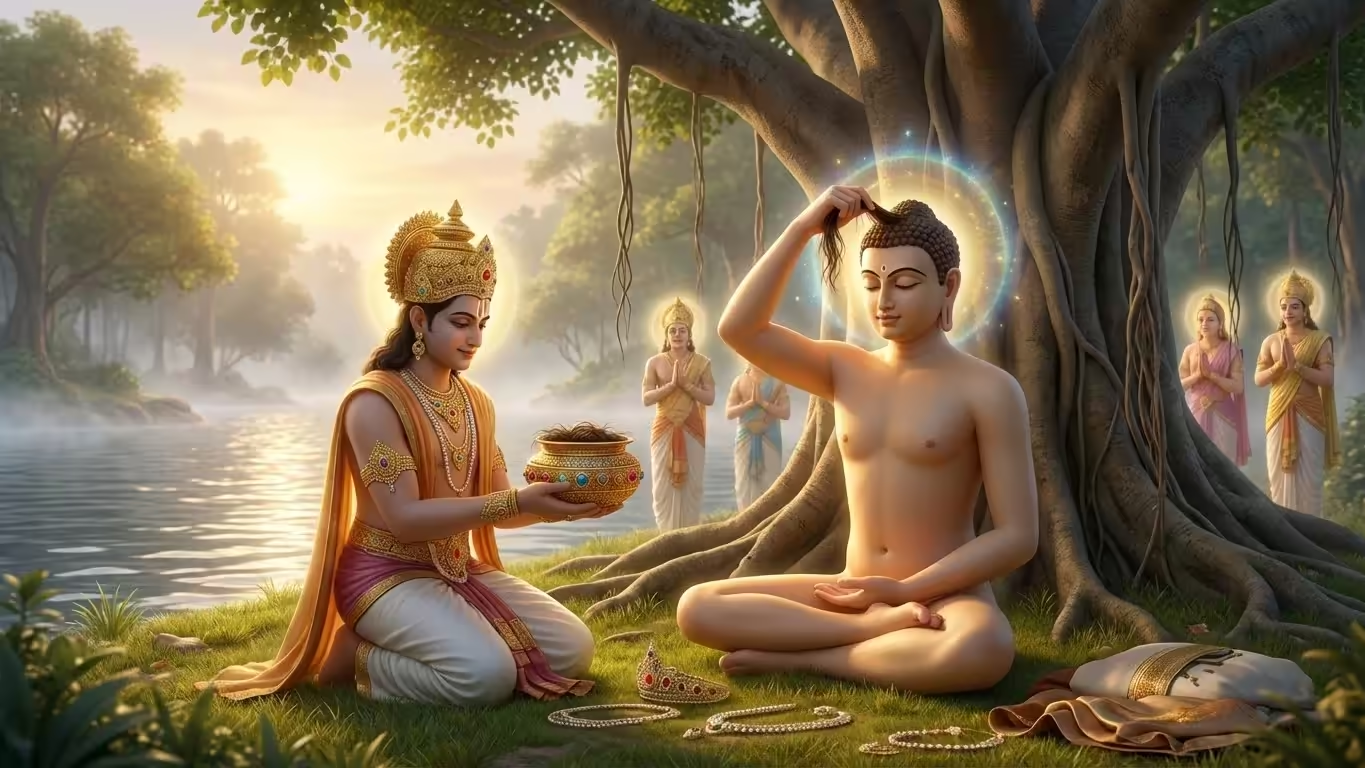
Bhagwan Ādināth plucked out his hair with his own hands in five fistfuls (Pañcha Muṣṭi Lonch). Saudharma Indra respectfully received the hair in a jewel-studded vessel and immersed it in the Kṣīra Sāgara (Ocean of Milk), preserving it as an object of divine veneration. At the very moment of Diksha, Manah Paryāya Jñāna (the ability to perceive others’ thoughts) manifested in his soul.
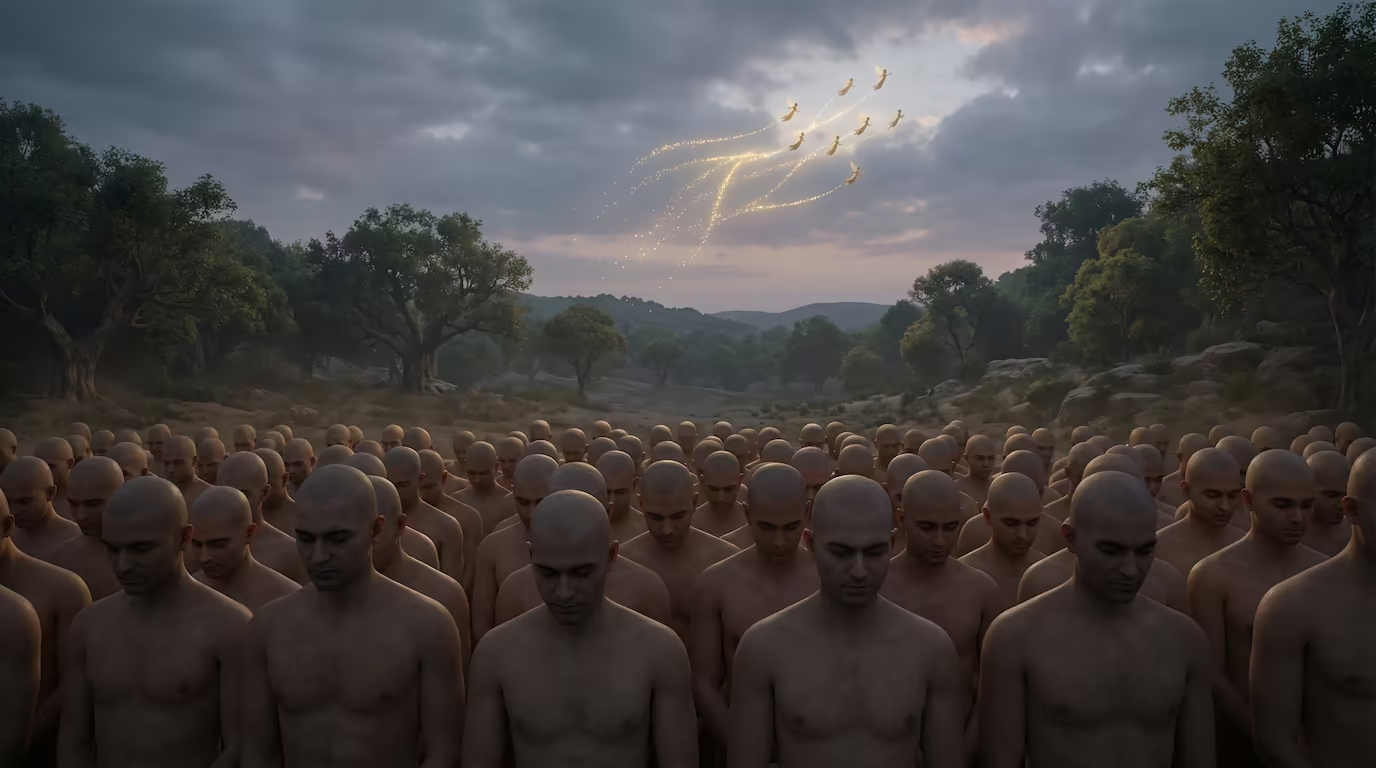
Moved by their King’s renunciation, 4000 subordinate kings also accepted Diksha alongside Bhagwan Ādināth. However, these kings had not fully conquered their internal passions. Later, when the Lord entered prolonged silent meditation without movement or food, they were unable to sustain the severe austerities. Breaking their vows, they eventually formed various false sects — becoming the origin of the 363 mithyā paths mentioned in Jain history. After celebrating the supreme renunciation, the Devas returned to their celestial abodes.
First Aahar: After accepting Diksha, Bhagwan Ādināth entered deep meditation and undertook prolonged austerities. For six months, he remained absorbed in silence, without movement and without seeking food, fully established in equanimity and self-awareness.
When Bhagwan Ādināth emerged from meditation and went out for āhār (alms), the world was unprepared. As this was the first Tirthankara of the era, no one knew the proper āhār-vidhi. People, out of devotion and innocence, offered garments, ornaments, and precious objects. Seeing these unsuitable offerings, the Lord returned silently without accepting food.
Thus, six more months passed without āhār, completing an entire year of uninterrupted fasting. During this time, Bhagwan Ādināth continued his vihar, detached and absorbed in spiritual discipline, without any expectation or desire.
One day, Bhagwan Ādināth arrived in Hastinapur. King Shreyans, upon seeing the Lord, experienced Jāti-smaraṇa Jñāna (remembrance of past lives). He recalled that in a previous birth, he had offered āhār to a monk along with Bhagwan Ādināth’s soul. Instantly understanding the correct āhār-vidhi, King Shreyans respectfully offered sugarcane juice (Ikṣu Rasa) to the Lord.
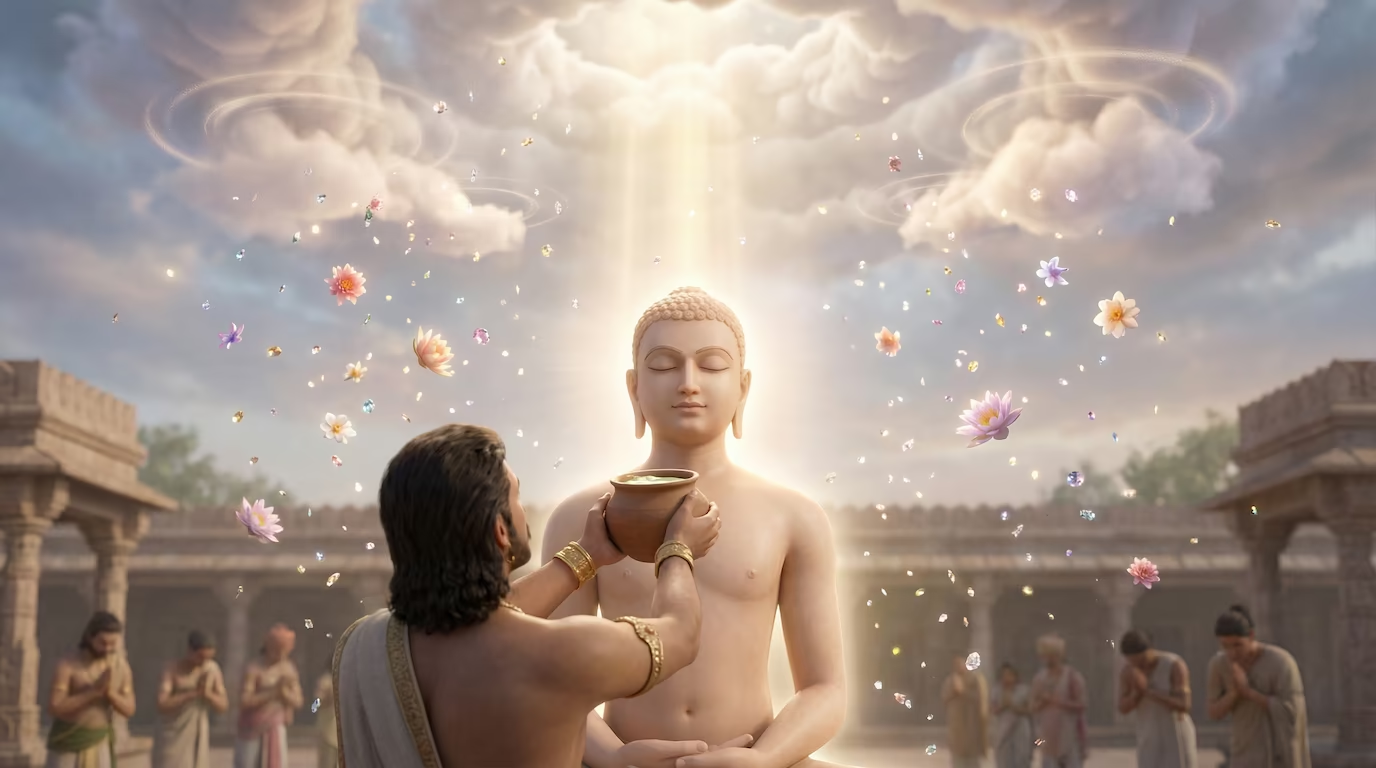
Bhagwan Ādināth accepted the āhār, marking the first proper āhār-dāna of the avasarpinī era. At that moment, divine showers of gems and flowers occurred, celestial drums resounded, and a heavenly proclamation declared the greatness of the donor and the offering. This sacred event came to be celebrated as Akṣaya Tṛtīyā.
Step 04
Keval Gnan
TimeFalgun Krishna Ekadashi
PlacePurimtal (Prayagraj)
Key DetailPenance: 1000 Years
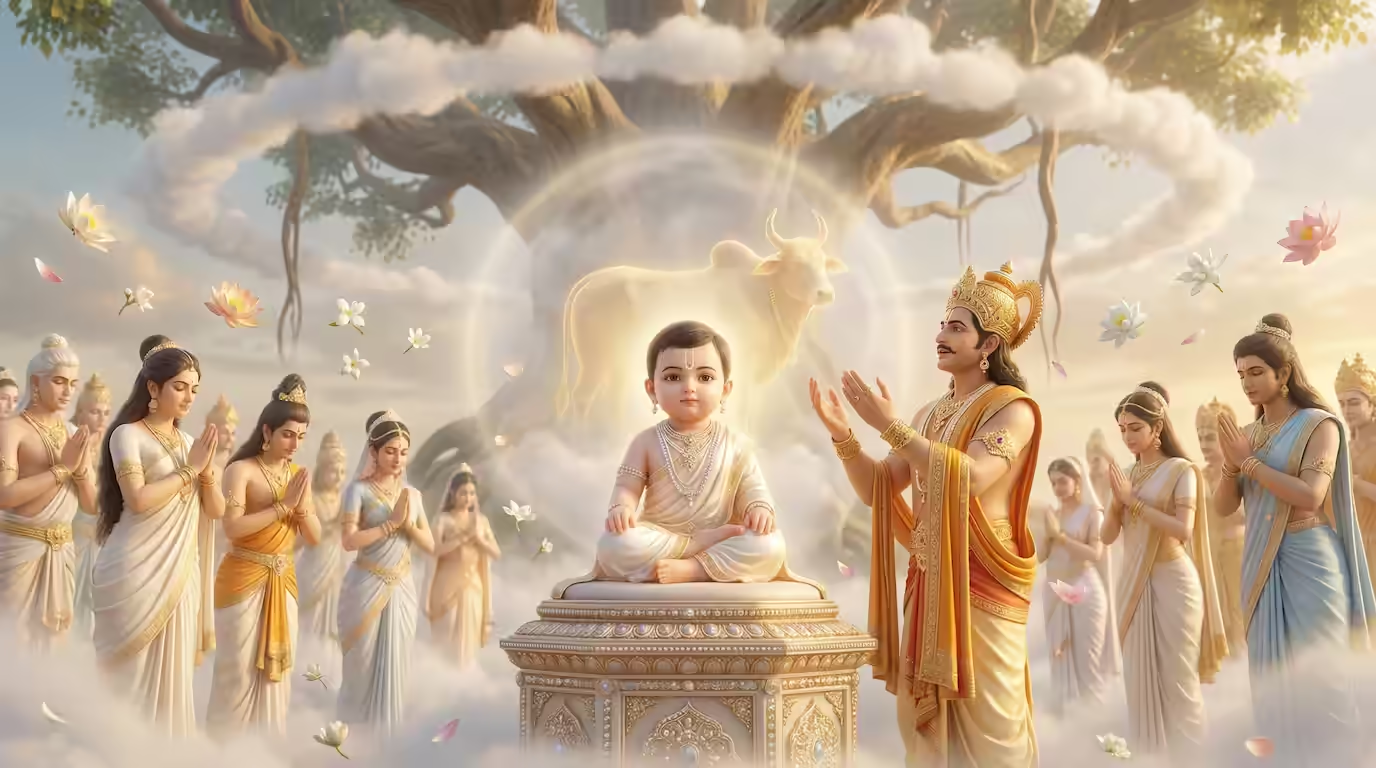
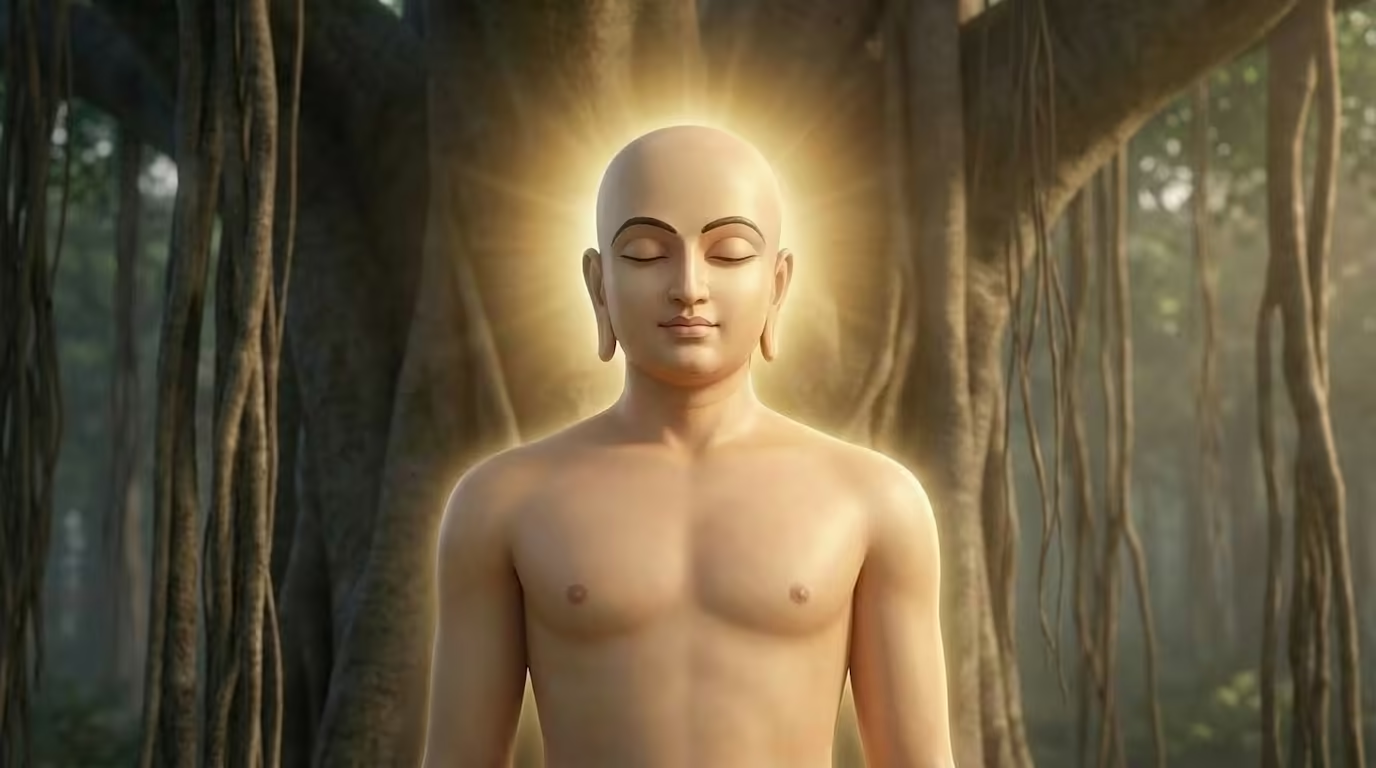
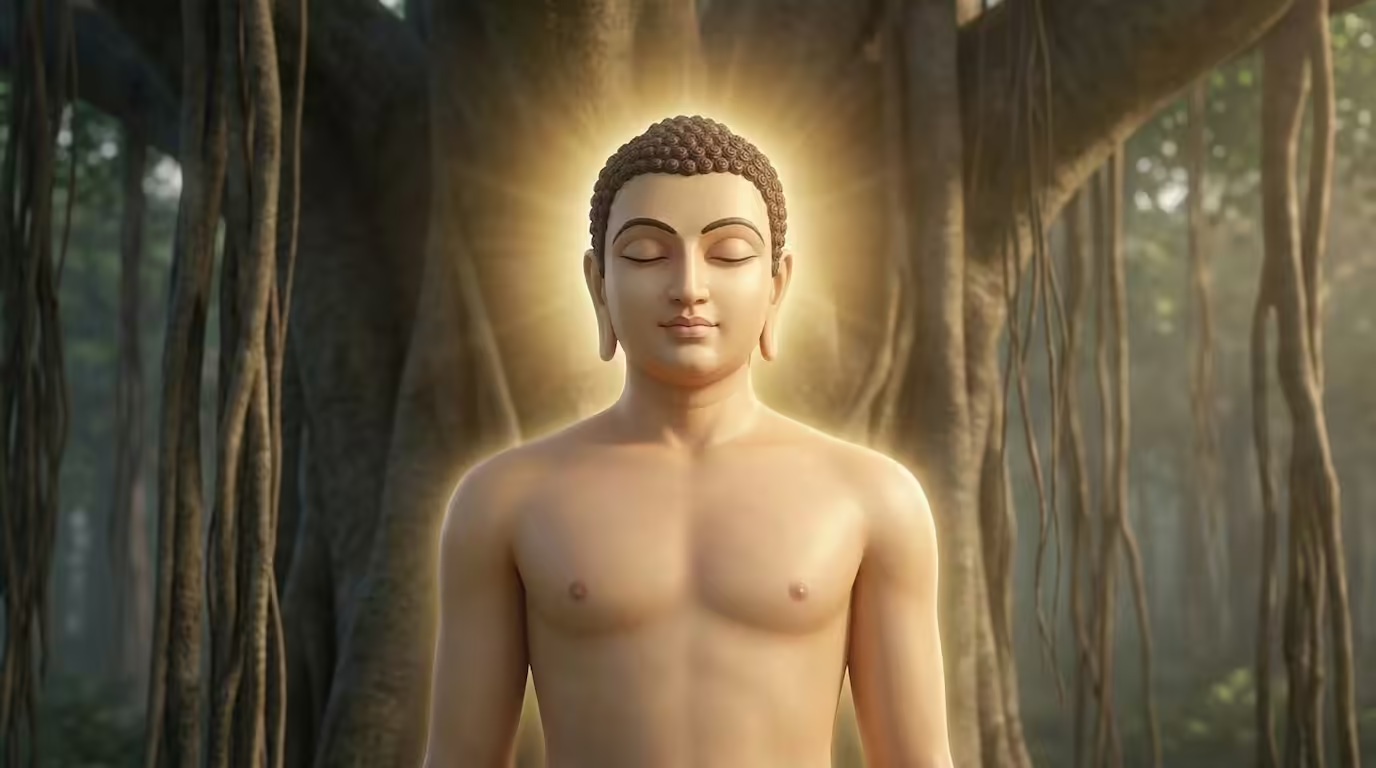
After accepting Diksha, Bhagwan Ādināth wandered in complete silence for one thousand years, performing the most severe austerities. He endured hunger, thirst, heat, cold, and pain without the slightest attachment, steadily burning away karmic bondage through unwavering penance. In the final phase of his spiritual journey, Bhagwan Ādināth arrived at the city of Purimtal, identified with present-day Prayāg. Entering the sacred Śakaṭamukha garden, he stood beneath a great Banyan tree known as Nyagrodha or Akṣayavaṭa, the eternal tree.
Standing motionless in the Kayotsarga posture, Bhagwan Ādināth undertook a final fast of four days. His body remained perfectly still, fully abandoned, while his consciousness turned entirely inward toward the pure nature of the soul.
During this profound meditation, Bhagwan Ādināth ascended the highest spiritual stages and entered Śukla Dhyāna — the purest form of meditation. Through its blazing inner fire, he completely destroyed the four Ghātiyā Karmas: Mohanīya (delusion), Jñānāvaraṇīya (knowledge-obscuring), Darśanāvaraṇīya (perception-obscuring), and Antarāya (obstructive). With the total annihilation of these karmas, the soul of Bhagwan Ādināth manifested its true, infinite nature. On Phālguna Kṛṣṇa Ekādaśī, under the Uttarāṣāḍhā constellation, he attained Kevalgyān — absolute, infinite knowledge — perceiving all substances, all modes, across past, present, and future simultaneously.
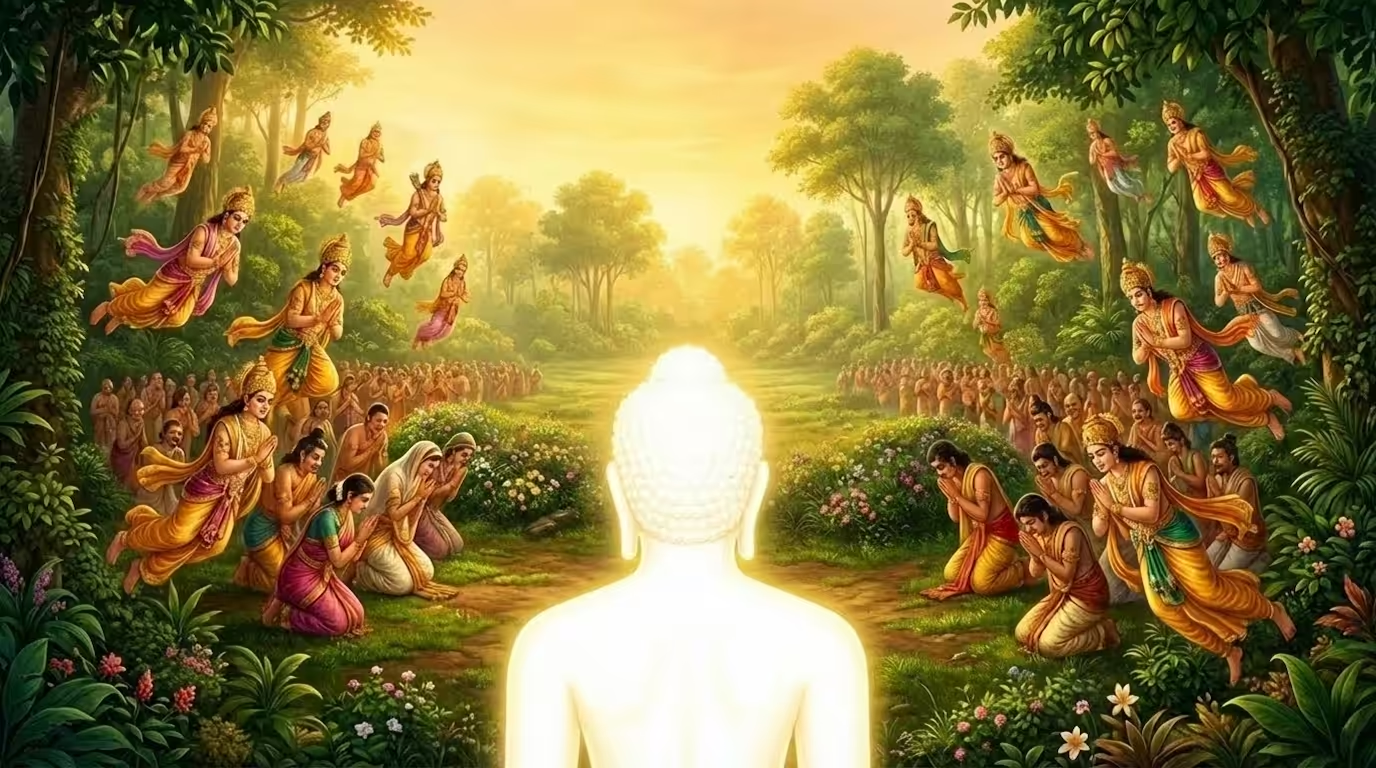
At the very instant Kevalgyān arose, the universe resonated with divine joy. The thrones of the Indras trembled, and devas from all four celestial realms — Bhavanapati, Vyantara, Jyotiṣka, and Kalpavāsī — descended upon Purimtal to witness the supreme event. Saudharma Indra, the lord of the first heaven, arrived with his divine retinue. He circumambulated Bhagwan Ādināth with deep reverence and bowed before him, recognizing the manifestation of the Supreme Kevali.
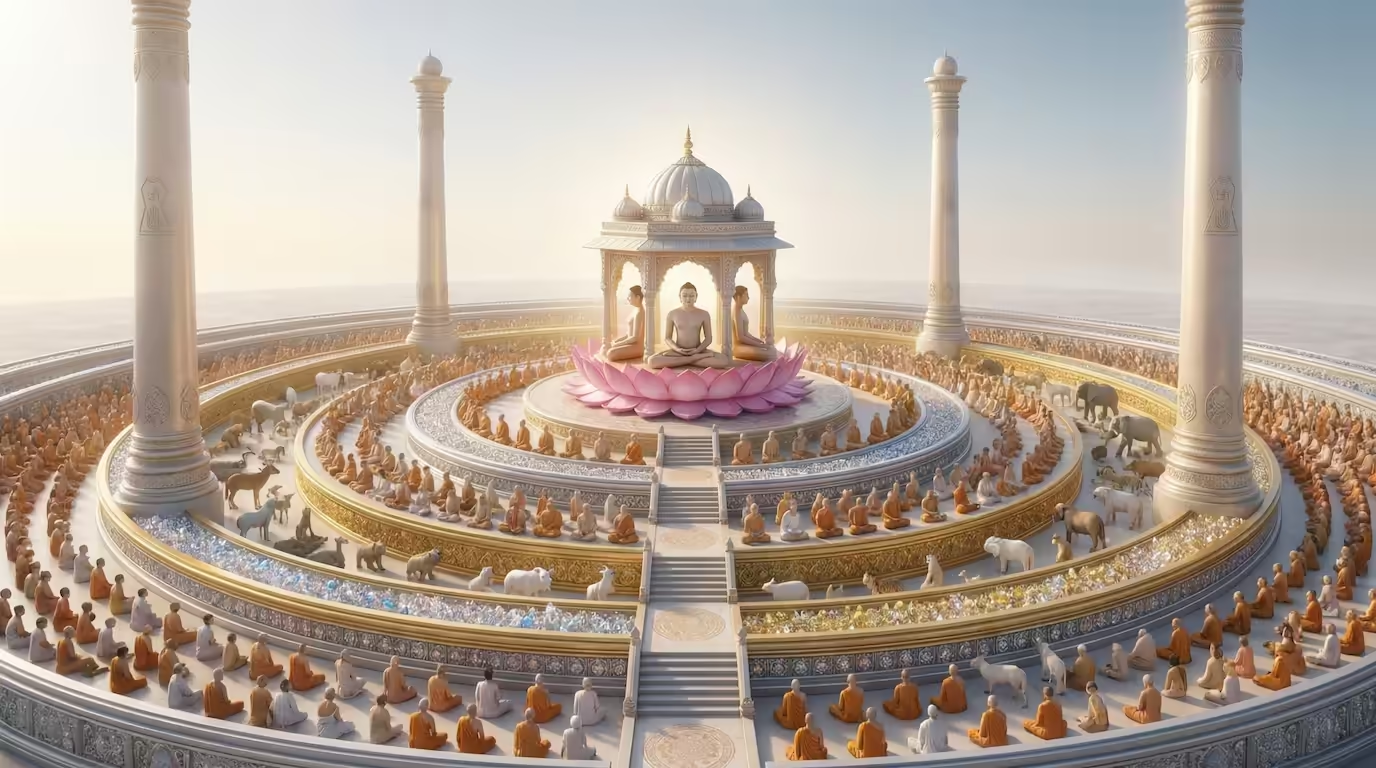
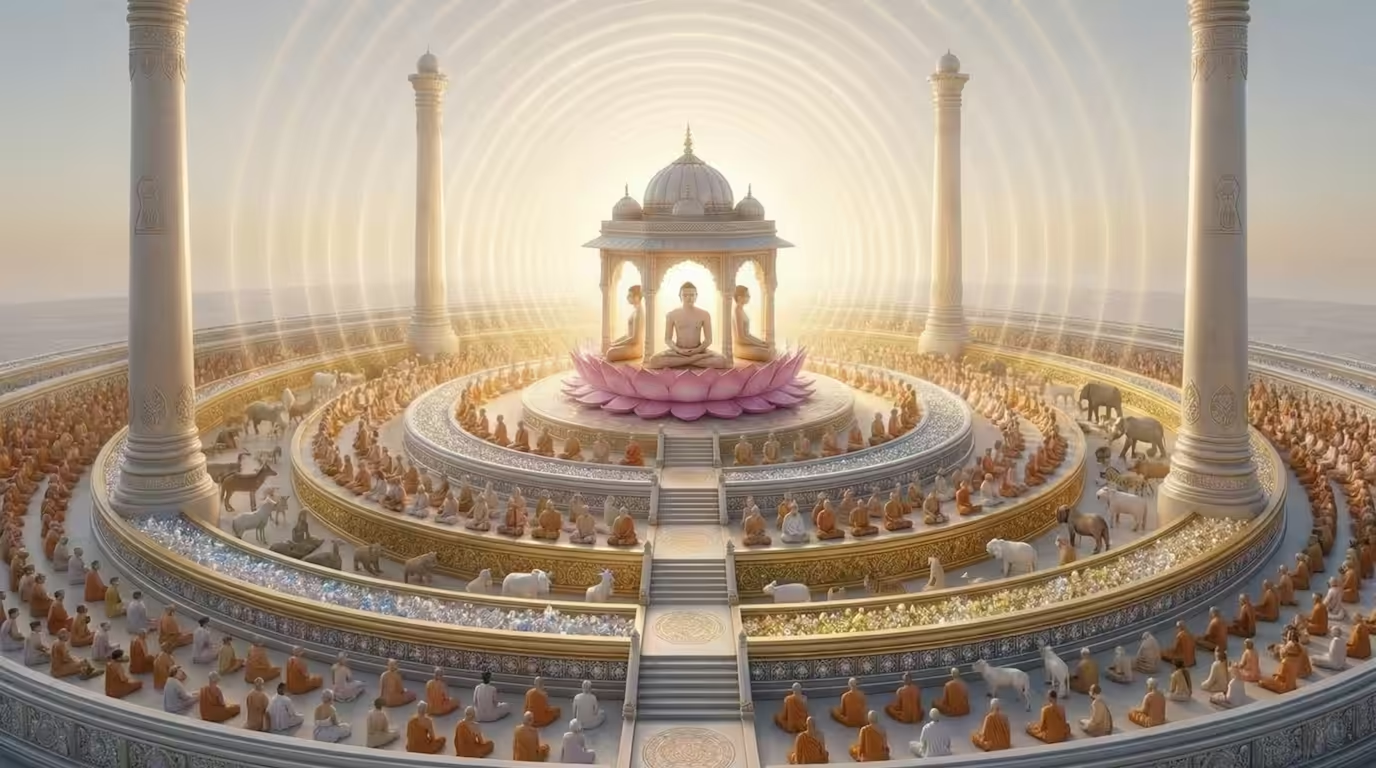
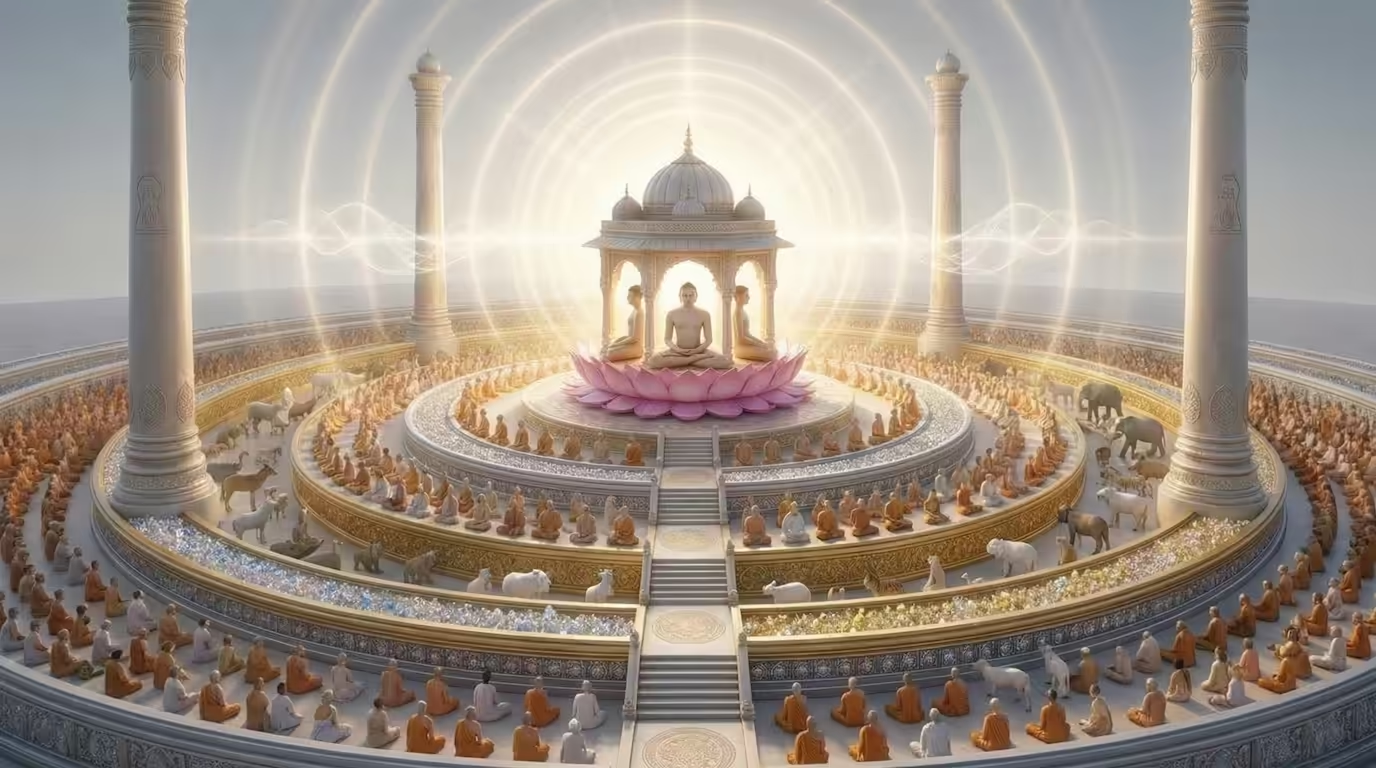
At Indra’s command, Kubera, the treasurer of the gods, constructed the magnificent Samavasaraṇa — the divine preaching assembly unique to a Tīrthaṅkara. The circular structure spanned twelve yojanas and radiated celestial splendor. At the four cardinal directions stood towering Manasthambhas, whose mere sight dissolved pride and ego. The Samavasaraṇa contained multiple enclosures of silver, gold, and jewels, with harmonious seating arrangements where humans, animals, and devas sat together without fear or hostility. At the very center stood the Gandhakuṭī, a divine dais. Bhagwan Ādināth was seated there, suspended four fingers’ breadth above a lotus throne, facing east — yet visible equally in all four directions.
From the body of Bhagwan Ādināth radiated a brilliance equal to a thousand suns. Free from hunger, thirst, sweat, shadow, and all bodily impurities, his divine voice manifested as Divya Dhvanī — a single, uninterrupted sound understood by every living being in their own language. Through this Divya Dhvanī, Bhagwan Ādināth expounded the eternal truths: the nature of reality as Dravya, Guṇa, and Paryāya; the path to liberation through Ratnatraya; and the principle of Anekāntavāda.
Among the listeners was Prince Vṛṣabhasena, Bhagwan Ādināth’s own son. Deeply moved by the sermon, he renounced the world, accepted Diksha, and became the first Gaṇadhara. He systematized the divine teachings into the Dvādaśāṅgī. Thus, the Chaturvidha Saṅgha was established: Munis led by Gaṇadhara Vṛṣabhasena, Aryikās led by Brāhmī Devi, Śrāvakas, and Śrāvikās. With this, Bhagwan Ādināth formally established the Tīrtha, opening the eternal path to liberation for countless souls.
Step 05
Moksha
TimeMagha Krishna Chaturdashi
PlaceMount Ashtapad (Kailash)
After preaching the Dharma for many years and firmly establishing the Tīrtha, Bhagwan Ādināth perceived that his remaining Āyu Karma — the lifespan-determining karma — was nearing its completion. The destined moment to leave the worldly realm entirely had arrived.
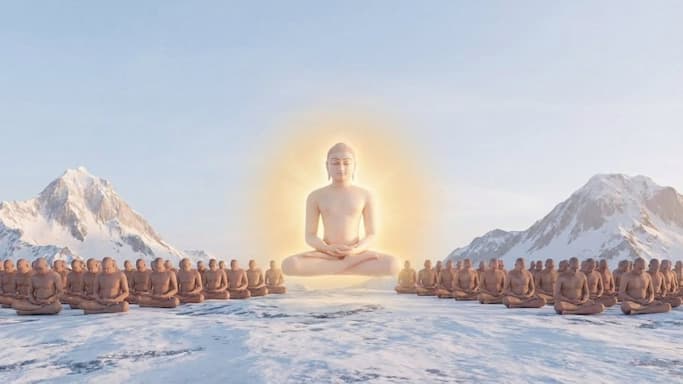
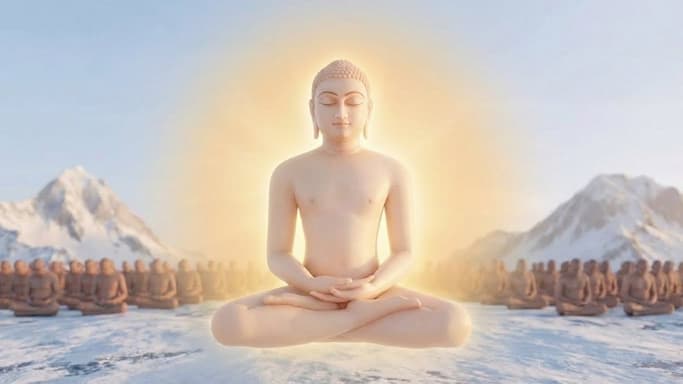
Bhagwan Ādināth ascended the sacred Mount Aṣṭāpada, accompanied by ten thousand Munis who were equally destined for liberation. The mountain stood as the final sacred stage for the completion of his earthly spiritual journey. Upon the summit, Bhagwan Ādināth assumed the posture of profound meditation — Padmasan (the seated lotus posture). Having descended from the Samavasaraṇa, he completely relinquished all remaining connections to the world.
Entering the supreme state of Yoga Nirodha, Bhagwan Ādināth brought all activities of mind, speech, and body — Man, Vachan, and Kāya — to absolute stillness. With this total cessation, the influx of new karma was entirely stopped, achieving complete Āsrava Nirodha. Absorbed in the final stages of Śukla Dhyāna, Bhagwan Ādināth focused upon the destruction of the remaining four Aghātiyā Karmas — Vedanīya (feeling-producing), Āyu (lifespan), Nāma (physique-determining), and Gotra (status-determining) — which alone still bound the soul to the physical body.
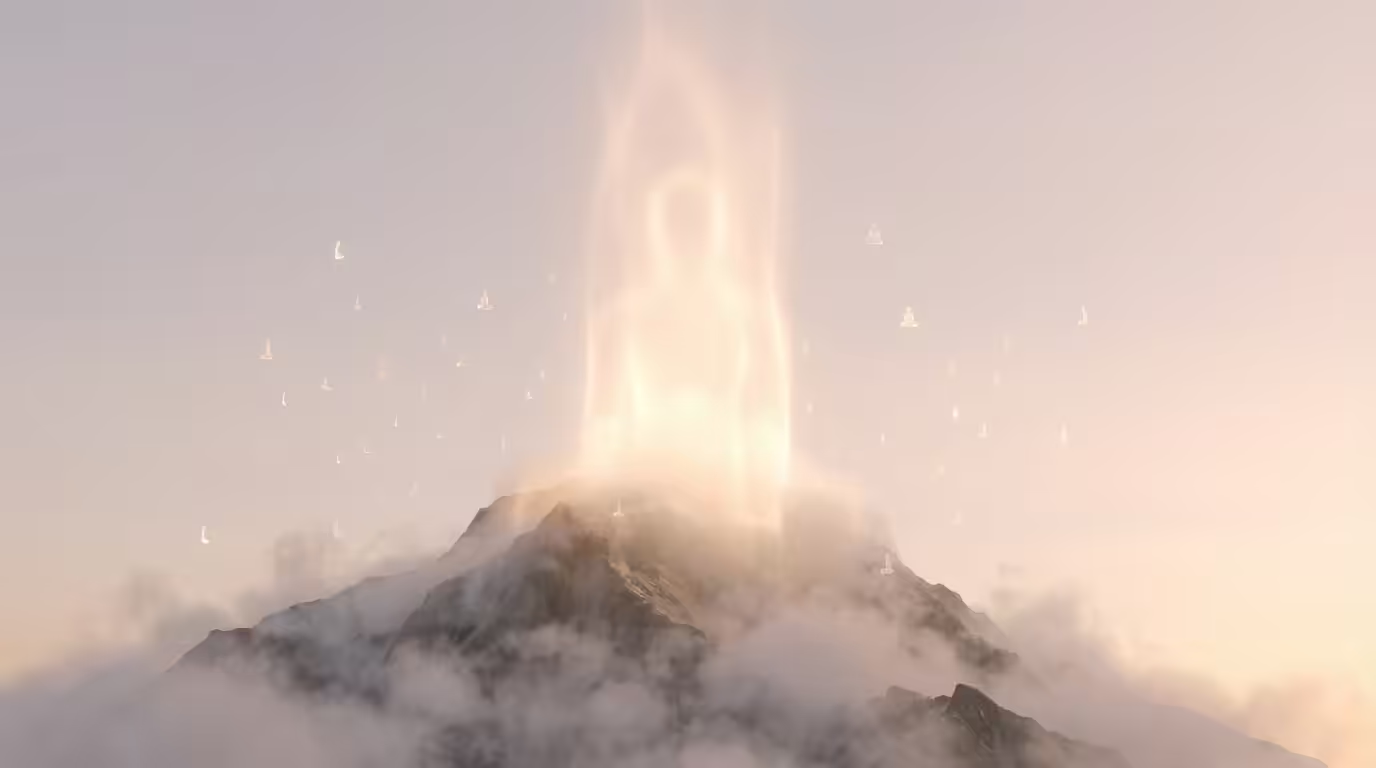
The supremely auspicious moment arrived on Māgha Kṛṣṇa Chaturdaśī, the fourteenth day of the dark half of the month of Māgha. The moment occurred just before sunrise, during the sacred Brahmamuhūrta. With the annihilation of the final karmas, Bhagwan Ādināth’s soul became completely free from the cycle of birth and death. He attained Moksha, becoming a Siddha — bodiless, formless, eternally pure, and endowed with infinite knowledge, infinite perception, and infinite bliss.
Instantly, his liberated soul ascended upward to the Siddhaśilā — the eternal abode of liberated souls — situated at the summit of the universe, beyond all material realms. Along with Bhagwan Ādināth, the ten thousand Munis who were meditating alongside him also attained Moksha, forever freed from worldly existence and boundless in their perfected state.
The Journey
Witness the
Divine Path
Step 01
Garbha
TimeAshadh Krishna Dwitiya
Six months prior to Bhagwan Ṛiṣabhdev’s descent from the Sarvārth Siddhi Vimaan, by the command of Indra, Kuber begins Ratna Vṛṣṭi (jewel-rain) in the city of Ayodhya. Divine jewels started raining from the sky, and the atmosphere of happiness, peace, and auspiciousness spread throughout the city. This Ratna Vṛṣṭi is considered the first sign of a Tīrthaṅkar’s Garbha Avataraṇ.
Step 01Part 2
During this six-month period, 56 Dikkumārī Devis (Aṣṭa-kumārīkā) arrived in Ayodhya and were appointed to serve Mata Marudevi. These Devis constantly engaged in divine conversations to keep the mother joyful, entertained her, and prepared her physically and spiritually to hold the supreme soul. They remained continuously present as her companions and attendants.
Step 01Part 3
On the day of Āṣāḍh Krishna Dvitīyā, the soul of Bhagwan Ṛiṣabhdev descended from Sarvārth Siddhi and entered the womb of Mata Marudevi. This moment is known as Garbha Avataraṇ and is the principal moment of the Garbha Kalyāṇak.
Step 01Part 4
Immediately after the garbha pravesh, Mata Marudevi saw sixteen auspicious dreams — Lion, Elephant, Bull, Goddess Lakshmi, Garland, Moon, Sun, Flag, Kalash, Lake, Ocean of Milk, Celestial Aircraft, Heap of Jewels, Fire, Pair of Fish, and Throne.
Step 01Part 5
Through his Avadhi Gyaan, Indra came to know about the Garbha Avataraṇ of the Tīrthaṅkar. He arrived in Ayodhya along with Indrāṇī, circumambulated the city and the royal palace, and bowed to King Nābhirāy and Mata Marudevi. A grand celebration was held by the celestial beings, and with this, the Garbha Kalyāṇak concluded.
Step 02
Janma
TimeChaitra Krishna Navami
PlaceAyodhya
On Chaitra Krishna Navami, in the city of Ayodhya, Māta Marudevī gave birth to Bhagwān Ṛiṣabhdev, the first Tīrthaṅkar of this avasarpiṇī. At the exact moment of His birth, a profound divine effect spread across the three worlds. For a brief moment, suffering in the lower realms became inactive, and peace, light, and auspiciousness prevailed throughout the cosmos.
Step 02Part 2
Immediately after the divine birth, the deities of the four Nikāyas arrived to celebrate. Bhavanvāsī Devas sounded conch shells, Vyantara Devas beat divine drums, Jyotiṣka Devas produced lion-like roars, and Kalpavāsī Devas rang celestial bells. These spontaneous sounds announced the birth of the first Tīrthaṅkar to all realms.
Step 02Part 3
In Saudharma heaven, the throne of Saudharma Indra shook violently. Using his Avadhi Jñāna, Indra realized that the first Tīrthaṅkar had been born. Filled with devotion, he immediately set out for Ayodhya with his divine retinue, accompanied by Indrāṇī Śacī, riding the celestial elephant Airāvata.
Step 02Part 4
Indra sent Indrāṇī into the delivery chamber. She gently placed Māta Marudevī into a deep blissful sleep known as Avasvapnī Nidra. Creating a divine illusory child, she placed it beside the mother and respectfully carried the actual Tīrthaṅkar infant out to Indra.
Step 02Part 5
Seeing the divine child, Saudharma Indra was overwhelmed with devotion and manifested one thousand eyes, realizing two eyes were insufficient to behold the Lord’s beauty. Seating the infant on his lap, Indra led a grand procession on Airāvata towards Mount Meru, accompanied by countless deities.
Step 02Part 6
At the summit of Mount Meru, the procession reached Pāṇḍuk Vana, where the crescent-shaped Pāṇḍuk Śilā was prepared. The Lord was seated upon it, and the Devas performed Janmābhiṣek using 1008 golden pitchers filled with water from the Kṣīr Sāgar, while Indra led the ritual with deep devotion.
Step 02Part 7
After the Abhiṣek, the Lord was adorned with divine garments and celestial ornaments. Observing the signs of greatness and recalling Māta Marudevī’s dream of the bull, Indra named the child Ṛiṣabhdev. Recognizing Him as the first of all Tīrthaṅkars, Indra also hailed Him as Ādināth.
Step 02Part 8
The procession returned to Ayodhya. Indrāṇī replaced the illusory child with the real infant beside Māta Marudevī, who awoke unaware of the divine journey. Overwhelmed with joy, Saudharma Indra performed the celebrated Ānanda Tāṇḍava in the royal court. Thus, the Janma Kalyāṇak concluded in supreme divine celebration.
Step 03
Diksha
TimeChaitra Krishna Navami
PlaceSiddhartha Vana (Ayodhya)
Bhagwan Ādināth ruled Ayodhyā for an immeasurably long time, establishing civilization, social order, and righteous governance. When the destined moment for renunciation arrived, Saudharma Indra perceived that the Lord’s inner detachment was ready to manifest.
Step 03Part 2
To awaken this latent vairāgya for the benefit of the world, Indra arranged a grand celestial assembly in the royal court. The most beautiful apsarā, Nīlāñjanā, was invited to perform a divine dance. While dancing, Nīlāñjanā’s āyu karma suddenly exhausted. In a single moment, she collapsed and died. To maintain continuity for the unaware audience, Indra instantly replaced her with another identical celestial dancer, and the performance continued seamlessly.
Step 03Part 3
All present remained oblivious — except Bhagwan Ādināth. With his extraordinary perception, he directly witnessed Nīlāñjanā’s death. Reflecting deeply, he realized:“If even a celestial being’s life vanishes like a bubble of water, what permanence exists in this worldly existence?”
Step 03Part 4
The moment Bhagwan Ādināth resolved to renounce the world, the Laukāntika Devas — celestial beings dwelling at the edge of Brahmaloka and destined for liberation — descended from the heavens. They bowed with profound devotion and prayed: “O Lord, please accept Diksha and establish the Tīrtha for the salvation of countless souls.”
Step 03Part 5
Bhagwan Ādināth summoned his sons and formally relinquished all worldly authority. Bharata, his eldest son, was crowned King of Ayodhyā and destined to become the first Chakravartī. Bāhubali, his second son, was given the kingdom of Podanpur. The remaining territories were distributed among his other sons. Having fulfilled all worldly responsibilities, the Lord prepared for complete renunciation.
Step 03Part 6
Saudharma Indra created a magnificent divine palanquin named Sudarśanā. Bhagwan Ādināth ascended the palanquin. First, it was carried by great kings, then by Vidyādharas, and finally by the Devas themselves. The grand procession moved from Ayodhyā to Siddhārtha Vana, a sacred garden near Prayāg.
Step 03Part 7
On Chaitra Krishna Navamī — the same auspicious tithi as his birth — Bhagwan Ādināth descended from the palanquin beneath a Banyan tree (Vata Vṛkṣa). Standing facing the east (or north-east), he removed all royal ornaments, garlands, and garments, abandoning every possession. He accepted Digambara Diksha, becoming a sky-clad muni. With supreme reverence, he uttered: “Om Namah Siddhebhyaḥ” — marking the first invocation of this sacred salutation in the present time cycle.
Step 03Part 8
Bhagwan Ādināth plucked out his hair with his own hands in five fistfuls (Pañcha Muṣṭi Lonch). Saudharma Indra respectfully received the hair in a jewel-studded vessel and immersed it in the Kṣīra Sāgara (Ocean of Milk), preserving it as an object of divine veneration. At the very moment of Diksha, Manah Paryāya Jñāna (the ability to perceive others’ thoughts) manifested in his soul.
Step 03Part 9
Moved by their King’s renunciation, 4000 subordinate kings also accepted Diksha alongside Bhagwan Ādināth. However, these kings had not fully conquered their internal passions. Later, when the Lord entered prolonged silent meditation without movement or food, they were unable to sustain the severe austerities. Breaking their vows, they eventually formed various false sects — becoming the origin of the 363 mithyā paths mentioned in Jain history. After celebrating the supreme renunciation, the Devas returned to their celestial abodes.
Step 03Part 10
First Aahar: After accepting Diksha, Bhagwan Ādināth entered deep meditation and undertook prolonged austerities. For six months, he remained absorbed in silence, without movement and without seeking food, fully established in equanimity and self-awareness.
Step 03Part 11
When Bhagwan Ādināth emerged from meditation and went out for āhār (alms), the world was unprepared. As this was the first Tirthankara of the era, no one knew the proper āhār-vidhi. People, out of devotion and innocence, offered garments, ornaments, and precious objects. Seeing these unsuitable offerings, the Lord returned silently without accepting food.
Step 03Part 12
Thus, six more months passed without āhār, completing an entire year of uninterrupted fasting. During this time, Bhagwan Ādināth continued his vihar, detached and absorbed in spiritual discipline, without any expectation or desire.
Step 03Part 13
One day, Bhagwan Ādināth arrived in Hastinapur. King Shreyans, upon seeing the Lord, experienced Jāti-smaraṇa Jñāna (remembrance of past lives). He recalled that in a previous birth, he had offered āhār to a monk along with Bhagwan Ādināth’s soul. Instantly understanding the correct āhār-vidhi, King Shreyans respectfully offered sugarcane juice (Ikṣu Rasa) to the Lord.
Step 03Part 14
Bhagwan Ādināth accepted the āhār, marking the first proper āhār-dāna of the avasarpinī era. At that moment, divine showers of gems and flowers occurred, celestial drums resounded, and a heavenly proclamation declared the greatness of the donor and the offering. This sacred event came to be celebrated as Akṣaya Tṛtīyā.
Step 04
Keval Gnan
TimeFalgun Krishna Ekadashi
PlacePurimtal (Prayagraj)
After accepting Diksha, Bhagwan Ādināth wandered in complete silence for one thousand years, performing the most severe austerities. He endured hunger, thirst, heat, cold, and pain without the slightest attachment, steadily burning away karmic bondage through unwavering penance. In the final phase of his spiritual journey, Bhagwan Ādināth arrived at the city of Purimtal, identified with present-day Prayāg. Entering the sacred Śakaṭamukha garden, he stood beneath a great Banyan tree known as Nyagrodha or Akṣayavaṭa, the eternal tree.
Step 04Part 2
Standing motionless in the Kayotsarga posture, Bhagwan Ādināth undertook a final fast of four days. His body remained perfectly still, fully abandoned, while his consciousness turned entirely inward toward the pure nature of the soul.
Step 04Part 3
During this profound meditation, Bhagwan Ādināth ascended the highest spiritual stages and entered Śukla Dhyāna — the purest form of meditation. Through its blazing inner fire, he completely destroyed the four Ghātiyā Karmas: Mohanīya (delusion), Jñānāvaraṇīya (knowledge-obscuring), Darśanāvaraṇīya (perception-obscuring), and Antarāya (obstructive). With the total annihilation of these karmas, the soul of Bhagwan Ādināth manifested its true, infinite nature. On Phālguna Kṛṣṇa Ekādaśī, under the Uttarāṣāḍhā constellation, he attained Kevalgyān — absolute, infinite knowledge — perceiving all substances, all modes, across past, present, and future simultaneously.
Step 04Part 4
At the very instant Kevalgyān arose, the universe resonated with divine joy. The thrones of the Indras trembled, and devas from all four celestial realms — Bhavanapati, Vyantara, Jyotiṣka, and Kalpavāsī — descended upon Purimtal to witness the supreme event. Saudharma Indra, the lord of the first heaven, arrived with his divine retinue. He circumambulated Bhagwan Ādināth with deep reverence and bowed before him, recognizing the manifestation of the Supreme Kevali.
Step 04Part 5
At Indra’s command, Kubera, the treasurer of the gods, constructed the magnificent Samavasaraṇa — the divine preaching assembly unique to a Tīrthaṅkara. The circular structure spanned twelve yojanas and radiated celestial splendor. At the four cardinal directions stood towering Manasthambhas, whose mere sight dissolved pride and ego. The Samavasaraṇa contained multiple enclosures of silver, gold, and jewels, with harmonious seating arrangements where humans, animals, and devas sat together without fear or hostility. At the very center stood the Gandhakuṭī, a divine dais. Bhagwan Ādināth was seated there, suspended four fingers’ breadth above a lotus throne, facing east — yet visible equally in all four directions.
Step 04Part 6
From the body of Bhagwan Ādināth radiated a brilliance equal to a thousand suns. Free from hunger, thirst, sweat, shadow, and all bodily impurities, his divine voice manifested as Divya Dhvanī — a single, uninterrupted sound understood by every living being in their own language. Through this Divya Dhvanī, Bhagwan Ādināth expounded the eternal truths: the nature of reality as Dravya, Guṇa, and Paryāya; the path to liberation through Ratnatraya; and the principle of Anekāntavāda.
Step 04Part 7
Among the listeners was Prince Vṛṣabhasena, Bhagwan Ādināth’s own son. Deeply moved by the sermon, he renounced the world, accepted Diksha, and became the first Gaṇadhara. He systematized the divine teachings into the Dvādaśāṅgī. Thus, the Chaturvidha Saṅgha was established: Munis led by Gaṇadhara Vṛṣabhasena, Aryikās led by Brāhmī Devi, Śrāvakas, and Śrāvikās. With this, Bhagwan Ādināth formally established the Tīrtha, opening the eternal path to liberation for countless souls.
Step 05
Moksha
TimeMagha Krishna Chaturdashi
PlaceMount Ashtapad (Kailash)
After preaching the Dharma for many years and firmly establishing the Tīrtha, Bhagwan Ādināth perceived that his remaining Āyu Karma — the lifespan-determining karma — was nearing its completion. The destined moment to leave the worldly realm entirely had arrived.
Step 05Part 2
Bhagwan Ādināth ascended the sacred Mount Aṣṭāpada, accompanied by ten thousand Munis who were equally destined for liberation. The mountain stood as the final sacred stage for the completion of his earthly spiritual journey. Upon the summit, Bhagwan Ādināth assumed the posture of profound meditation — Padmasan (the seated lotus posture). Having descended from the Samavasaraṇa, he completely relinquished all remaining connections to the world.
Step 05Part 3
Entering the supreme state of Yoga Nirodha, Bhagwan Ādināth brought all activities of mind, speech, and body — Man, Vachan, and Kāya — to absolute stillness. With this total cessation, the influx of new karma was entirely stopped, achieving complete Āsrava Nirodha. Absorbed in the final stages of Śukla Dhyāna, Bhagwan Ādināth focused upon the destruction of the remaining four Aghātiyā Karmas — Vedanīya (feeling-producing), Āyu (lifespan), Nāma (physique-determining), and Gotra (status-determining) — which alone still bound the soul to the physical body.
Step 05Part 4
The supremely auspicious moment arrived on Māgha Kṛṣṇa Chaturdaśī, the fourteenth day of the dark half of the month of Māgha. The moment occurred just before sunrise, during the sacred Brahmamuhūrta. With the annihilation of the final karmas, Bhagwan Ādināth’s soul became completely free from the cycle of birth and death. He attained Moksha, becoming a Siddha — bodiless, formless, eternally pure, and endowed with infinite knowledge, infinite perception, and infinite bliss.
Step 05Part 5
Instantly, his liberated soul ascended upward to the Siddhaśilā — the eternal abode of liberated souls — situated at the summit of the universe, beyond all material realms. Along with Bhagwan Ādināth, the ten thousand Munis who were meditating alongside him also attained Moksha, forever freed from worldly existence and boundless in their perfected state.
Digital Aagam Presentation
Witness The Legend
Experience the divine journey of Bhagwan Adinath through a cinematic short film.
Life of Adinath
Life of Adinath
“A journey of non-violence and truth”
Watch Film